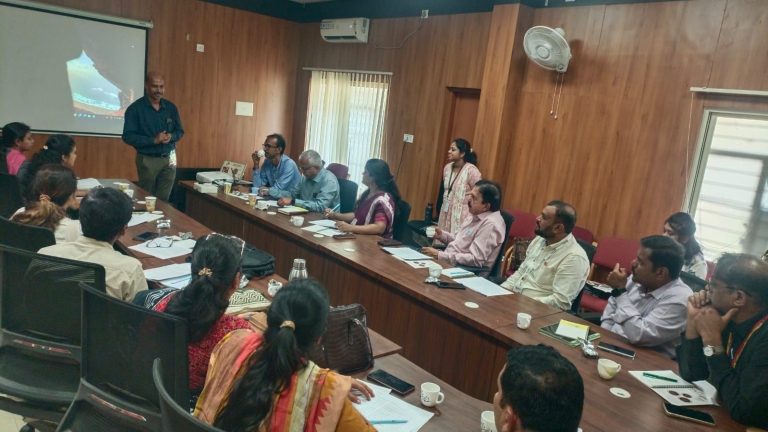
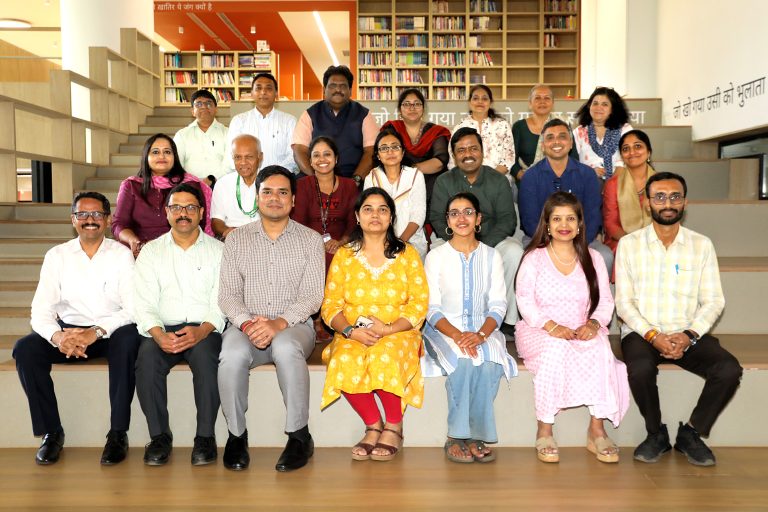
GRAAM (Grassroots Research and Advocacy Movement) hosted a panel discussion on “Reimagining M&E for Policy Impact: Engaging People, Leveraging Ai, and Advancing Methodologies.” at gLocal evaluation week, June 5th 2025 from 4:30 to 6:30 PM IST on Zoom Platform. Over 190+ were present for this Panel discussion.
Summary of the event
The panel discussion on “Reimagining M&E for Policy Impact” explored innovative strategies in Monitoring and Evaluation (M&E), focusing on ethical AI integration, participatory methods, and culturally responsive evaluations. Experts emphasized community engagement, indigenous knowledge systems, and institutional reform. AI was presented as a tool to enhance evaluation efficiency while maintaining ethical standards. Participatory approaches were shown to improve data relevance, and CRIE frameworks were promoted for inclusivity. The session called for the development of a National Evaluation Policy in India and systemic procurement reforms, aiming to build grassroots capacity and embed evaluation into governance for more effective, context-driven policymaking.
Key highlights of the event
Discussions on leveraging AI in M&E
Emphasis on culturally responsive and participatory M&E
Recognition of Evaluation at National level through a National Evaluation Policy
Objectives of the event/ Meeting
As the landscape of Monitoring & Evaluation (M&E) evolves, innovative approaches are essential to enhance data collection, analysis, and communication for impactful policymaking. This panel discussion was designed to enrich the audience’s knowledge with cutting-edge advancements in M&E, focusing on:
People Engagement: How participatory and community-driven evaluations strengthen policy relevance.
Methodological Innovations: Emerging frameworks that improve data quality and decision-making.
AI & Tech Tools in M&E: Leveraging artificial intelligence and digital platforms to enhance analysis, visualization, and communication of evaluation findings.
Experts from diverse backgrounds, government agencies, development organizations, academia, and technology firms will discuss real-world applications, case studies, and future trends in integrating technology and participatory methodologies to drive more responsive public policies.

Key Discussion Points
The session involved discussions ranging from including ethical use of AI in M&E to a call for action to develop a National Evaluation Policy and leverage the smaller players in the game by government institutions and private sector. Here’s is a glance of the key insights from each speaker:
Dr. Arun Karpur
Dr. Arun Karpur explored the evolving role of artificial intelligence (AI) in monitoring and evaluation (M&E), contextualizing it within a complex, data-rich, and interconnected world. He highlighted how evaluation today demands the ability to navigate high-dimensional datasets and address multifaceted social issues through transdisciplinary theories of change. He proposed a strategic integration of AI across the evaluation cycle from design to reporting serving as advisors, co-researchers, and co-authors. Dr. Karpur emphasized that while technology scales capability, evaluative reasoning must remain at the core. He mentioned a contextual approach that prioritizes understanding “what works, for whom, under what conditions,” advocating for a shift from attribution to contribution and encouraging transparent, ethical, and thoughtful AI use in evaluation practice.
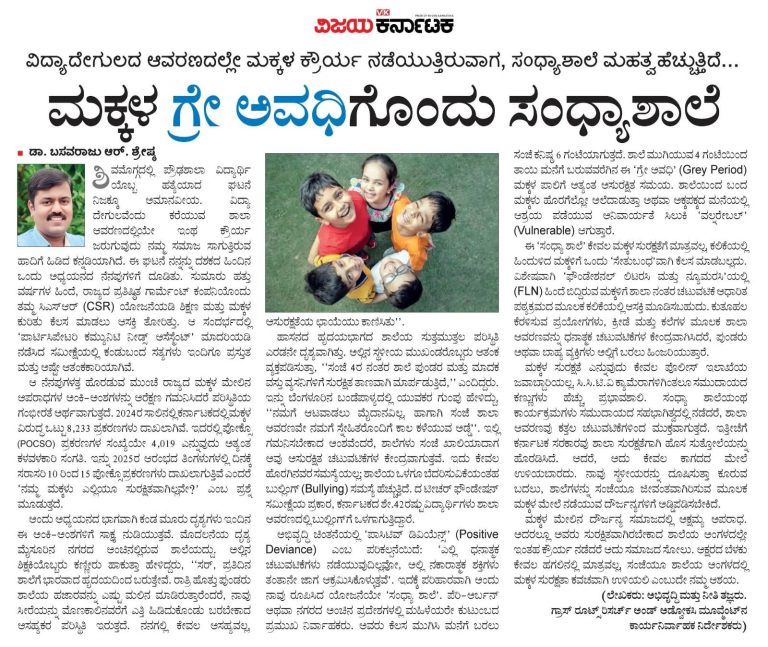
Dr. Basavaraju R. Shrestha
Dr. Basavaraju emphasized on the centrality of community participation in evaluations, arguing that evaluations should be shaped “by the people and for the people.” Drawing from field experience at GRAAM, he outlined how participatory approaches can enrich data quality, contextual understanding, and policy relevance. He stressed the importance of involving communities not just during data collection but right from the conceptualization and design phases, citing examples such as Forest Rights Act evaluations and social audits in Jharkhand.
Dr. R.Shreshtha advocated for the engagement of local data collectors and CBOs to enhance cultural sensitivity and trust, and described how such inclusive methods often lead to tangible community actions. He addressed challenges in adopting these methods, such as bureaucratic resistance, lack of policy support, and community fatigue, and called for systemic changes to embed participatory evaluation within institutional frameworks. His presentation underscored the idea that community ownership in M&E leads to more grounded and sustainable development outcomes.
Mr. Serge Eric
Mr. Serge Eric focused on culturally responsive and indigenous evaluations, stressing the importance of recognizing local values, traditional knowledge systems, and historical contexts. He explained that such evaluations require adapting methodologies to be inclusive of indigenous priorities, with principles centered on respect, relational engagement, and community-driven processes. He emphasized the use of narrative techniques, storytelling, traditional ceremonies, and collaboration with elders and local knowledge keepers to foster more authentic and meaningful evaluations. He introduced frameworks like CRIE that help decolonize evaluation practice and amplify indigenous voices. According to Mr. Eric, cultural responsiveness enhances not only the quality and relevance of evaluation findings but also community ownership, policy alignment, and long-term impact.
Mr. Antony Cyriac
Mr. Antony Cyriac provided an administrative and policy-oriented perspective on evaluation within the Indian government. He outlined the scale and complexity of India’s public expenditure, noting the challenge of evaluating over 550 central sector and centrally sponsored schemes. He discussed the need to evaluate not only schemes but also the institutions implementing them and even non-schematic expenditures. He emphasized the importance of institutional mechanisms like the Development Monitoring and Evaluation Office (DMEO) and State Evaluation Authorities, while identifying procurement as the most critical component requiring reform. He stressed that evaluation must move beyond reporting to influence policy through advocacy and institutional memory. Although there is no formal national evaluation policy, he highlighted that processes are increasingly being aligned with fiscal cycles, such as the Finance Commission’s five-year term. Mr. Cyriac called for strengthening grassroots evaluation capabilities, particularly in infrastructure and institutional performance, and advocated for evaluations to become a routine culture across all tiers of government, not just at the central level.
Decisions Taken / Key Outcomes
The panel on “Reimagining M&E for Policy Impact” highlighted three critical advancements: ethical integration of AI, participatory evaluation, and culturally responsive methodologies. AI was positioned as a tool to enhance analytical capacity across the evaluation cycle, provided ethical principles guide its use. Participatory approaches were shown to improve data quality and policy relevance through community ownership. Culturally Responsive and Indigenous Evaluation (CRIE) frameworks emphasized inclusion of indigenous knowledge. The discussion also recognised and made a call to action for a National Evaluation Policy in India and systemic reforms in procurement to empower grassroots actors, ensuring more inclusive, context-driven, and effective evaluation practices.
Next Steps & Action Points
Key action points emerging from the session include the need to leverage AI in a transparent and ethical manner to navigate the growing complexities in Monitoring and Evaluation (M&E). There was a strong call to work toward building a National Evaluation Policy in India to institutionalize the field and ensure sustained government engagement. Speakers emphasized the importance of embedding context into evaluations through culturally responsive methodologies like CRIE, which is a traditional practice. Additionally, adopting participatory approaches from the inception stage of M&E projects was highlighted as crucial for ensuring contextually relevant interventions, greater community ownership, and more impactful outcomes.