Mysuru | June 19-20, 2025
Governance isn’t something you can fully understand from textbooks or policy documents. It lives in the everyday interactions between citizens and institutions, in waste processing plants, panchayat offices, health centers, and village squares. It’s messy, complex, and deeply human.
This is the insight that drove GRAAM’s Youth for Governance (Y4G) Fellowship to organize a two-day immersive expedition on June 19-20, 2025, taking young fellows beyond theory and into the heart of how governance actually functions, both in urban Mysuru and in the rural hinterlands of Hunsur Taluk.
Day 1 (June 19): Understanding Urban Governance in Mysuru
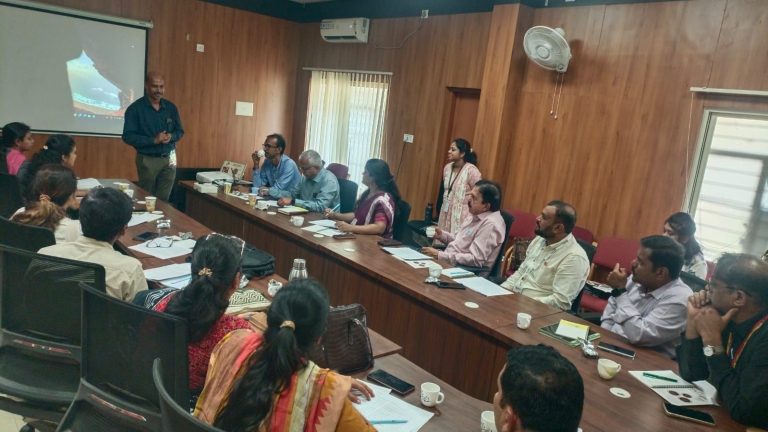
The urban governance expedition began at the Zone-3 Office of Mysuru City Corporation (MCC), where fellows were welcomed by Mr. Mrutyunjaya, Assistant Executive Engineer (Environment).

Inside the Municipal Machinery

- The organizational structure of MCC and how different departments coordinate
- Mysuru’s pioneering efforts in solid waste management
- The city’s approach to environmental sustainability and citizen services
- The challenges of managing a growing urban population while maintaining livability
For many fellows, this was their first glimpse into the inner workings of local urban governance, not as an abstract concept, but as a living, breathing system with real people making daily decisions that affect thousands of lives.
Behind the Scenes: The Rayanakere Solid Waste Processing Plant
The expedition then moved to the Rayanakere Solid Waste Processing Plant, where the theoretical became tangible.
Mr. Jayashankar, who oversees operations at the plant, provided a detailed walkthrough of:
- Waste segregation processes: How Mysuru’s door-to-door collection translates into systematic sorting
- Composting operations: Turning organic waste into valuable compost for agriculture
- Sustainable disposal methods: Managing non-recyclable waste responsibly
- Infrastructure and technology: The machinery, logistics, and manpower that keep the city clean
Standing amid the hum of machinery and the reality of waste management, fellows gained a profound appreciation for what it takes to keep a city like Mysuru, often celebrated as one of India’s cleanest cities, functioning sustainably.
♻️ This wasn’t just about waste. It was about circular economy principles in action, about environmental responsibility, and about the unglamorous but essential work that makes urban life possible.
Questions, Curiosity, and Clarity
The day concluded with a lively Q&A session where fellows didn’t hold back. They asked about:
- Budget allocations for waste management
- Citizen participation and behavioral change
- Technology adoption and innovation in municipal services
- Career pathways in urban governance and environmental management
- The gap between policy intent and ground-level implementation

These weren’t passive learners absorbing information, they were active thinkers engaging critically with urban systems, asking the kinds of questions that suggest they’re already thinking like governance practitioners.
Day 2 (June 20): Grassroots in Focus – Rural Governance Expedition
If Day 1 was about understanding the scale and complexity of urban governance, Day 2 was about proximity, and the human face of rural institutions.
The fellows traveled to Bannikuppe Gram Panchayat in Hunsur Taluk, Mysuru District, for a ground-level exploration of how governance functions in rural India.

1. Gram Panchayat Office: Where Democracy Meets Daily Life
The day began at the Bannikuppe Gram Panchayat Office, where fellows met:
- Mr. Prasanna, Panchayat Development Officer (PDO)
- The Gram Panchayat President
- Other panchayat officials
Mr. Prasanna provided a comprehensive orientation on:
- The structure, roles, and responsibilities of the Gram Panchayat
- Development schemes and fund allocation at the local level
- Citizen participation mechanisms and grievance redressal
- The challenges of rural administration from infrastructure to human resources

Fellows actively engaged, posing questions about:
- How decisions are made at the panchayat level
- The role of elected representatives versus administrative officials
- Community involvement in planning and monitoring
- Accountability mechanisms and transparency in fund utilization
This wasn’t a lecture it was a conversation between future governance practitioners and those currently doing the work, bridging the gap between aspiration and reality.
2. Primary Health Centre (PHC): Healthcare at the Frontlines

Next, the fellows visited the local Primary Health Centre, where they were welcomed by:
- Dr. Pavitra, who briefed them on healthcare services and the role of rural health institutions
- Ms. Rani and Ms. Rohini, supporting staff who provided insights into PHC operations
The session covered:
- Healthcare services available at the PHC level
- Staff roles and the challenge of managing healthcare with limited resources
- Maternal health services and immunization programs
- Outreach initiatives and community health awareness
- Infrastructure gaps and the need for continued investment
Fellows asked critical questions about:
- Service accessibility for marginalized communities
- Community participation in health governance
- The role of ASHAs (Accredited Social Health Activists) and Anganwadi workers
- Coordination between different levels of the health system
Standing in a rural health center, the fellows understood viscerally that healthcare governance isn’t just about policy, it’s about ensuring that a pregnant woman in a remote village can access safe delivery, that children get vaccinated on time, and that basic health services don’t remain an urban privilege.
3. Government Higher Primary School: Education and Community Oversight
The expedition continued to the Government Higher Primary School in Bannikuppe, where fellows were welcomed by:
- Mr. Timmegowda, Headmaster
- Teaching staff
The interaction focused on:
- The role of the School Development and Monitoring Committee (SDMC)
- Community involvement in school governance and development
- Challenges faced by rural schools from infrastructure to teacher availability
- The importance of public oversight and parental engagement
For many fellows, this was an eye-opening moment: schools aren’t just educational institutions managed top-down by the government. They’re community assets that depend on active participation from parents, local leaders, and monitoring committees.
The fellows learned that governance in education means ensuring not just enrollment, but quality, retention, and meaningful learning outcomes and that this requires collaboration between the state and civil society.
4. Anganwadi Centre: The Foundation of Early Childhood Development
The final institutional visit was to the Anganwadi Centre, where fellows met:
- Ms. Sabina, Anganwadi worker
- Local women, including lactating mothers
The interaction provided insights into:
- The role of Anganwadi centers in nutrition, early childhood education, and health awareness
- Services for pregnant women, lactating mothers, and children under six
- Community engagement and the trust between Anganwadi workers and local families
- The challenges of working with limited resources while serving critical developmental needs

This visit offered a grassroots perspective on how governance functions at the most foundational level not through large institutions, but through dedicated individuals working closely with communities, building trust one interaction at a time.
5. Household Interactions: Governance from the Citizen’s Lens
The expedition concluded with household visits and conversations with residents of Bannikuppe. This was perhaps the most important part of the day.
Fellows spoke directly with villagers to understand:
- How they experience governance, what works, what doesn’t
- Their awareness of schemes and entitlements
- Barriers to accessing services
- Their expectations from elected representatives and government officials
- The gap between what’s promised and what’s delivered
These conversations revealed that governance isn’t just about institutions and systems, it’s about trust, responsiveness, and whether ordinary people feel heard and served.
Why These Expeditions Matter
The Youth for Governance Fellowship isn’t just about producing well-informed young professionals. It’s about cultivating a generation of leaders who understand governance not as an abstract concept, but as a lived reality shaped by people, processes, institutions, and the everyday choices they make.
What Fellows Gained
- Systems Thinking: Understanding how different institutions, municipal corporations, panchayats, health centers, schools, Anganwadis, interconnect to deliver services
- Ground-Level Perspective: Seeing the gap between policy and practice, and appreciating the constraints and challenges faced by frontline workers
- Critical Engagement: Learning to ask the right questions, challenge assumptions, and think beyond textbook solutions
- Empathy and Humility: Recognizing that governance is complex, that there are no easy answers, and that meaningful change requires patience, collaboration, and deep contextual understanding
- Career Clarity: Gaining exposure to different pathways in governance from municipal administration to rural development, from public health to education management
Young Changemakers in Action
As the fellows walked through waste processing plants, sat in panchayat offices, spoke with doctors and teachers, and listened to villagers share their experiences, something shifted.
Governance stopped being something distant and theoretical. It became real, urgent, and deeply connected to the lives of millions.
And that shift from passive observer to active thinker, from abstract learner to engaged citizen is exactly what the Youth for Governance Fellowship is designed to achieve.
These two days weren’t just field visits. They were invitations into a lifetime of civic engagement, public service, and working toward a governance system that truly serves the people it’s meant to protect.
The Youth for Governance Fellowship is a flagship initiative by GRAAM in partnership with Hanns Seidel Foundation, designed to build the next generation of governance practitioners rooted in real-world experience, critical thinking, and a commitment to public service.
Because governance begins with understanding and understanding begins with immersion. 🌱
Hashtags:
#YouthForGovernance #Y4G #UrbanGovernance #RuralGovernance #GRAAMInitiative #Mysuru2025 #GovernanceExpedition #SustainableCities #GramPanchayat #PrimaryHealthCare #CivicEngagement #YouthLeadership #SwachhMysuru #GrassrootsGovernance