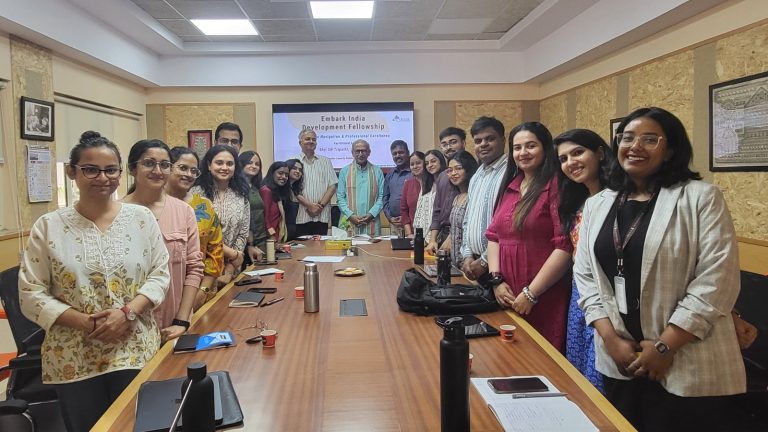
When you are in a ministry in the Government of India, the skill set you need to bring is analytical, the ability to digest vast amounts of information and produce the notes required for decision-making. – Dr. Santhosh Mathew
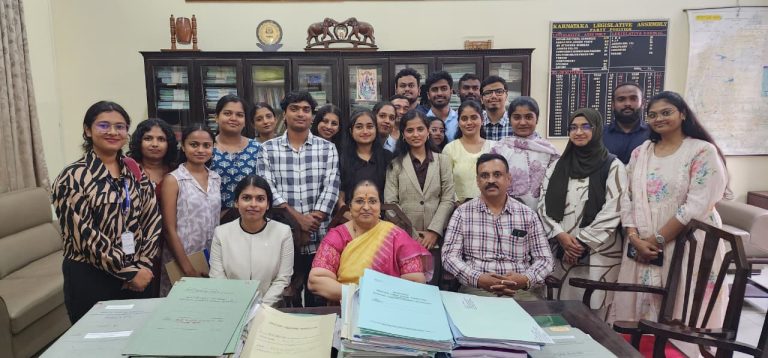
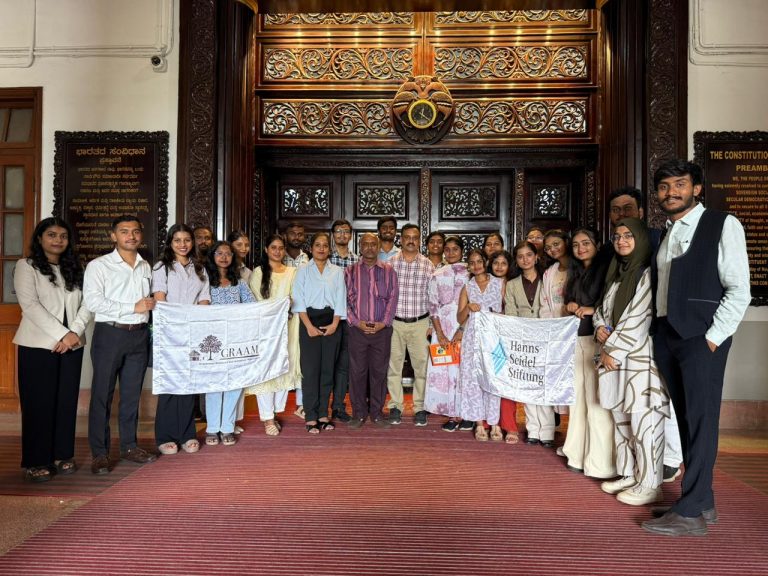
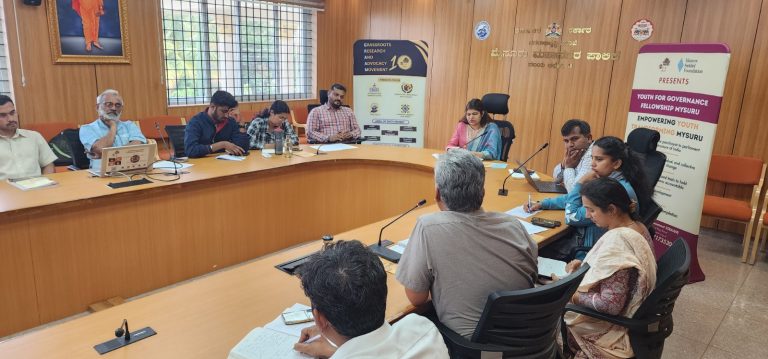
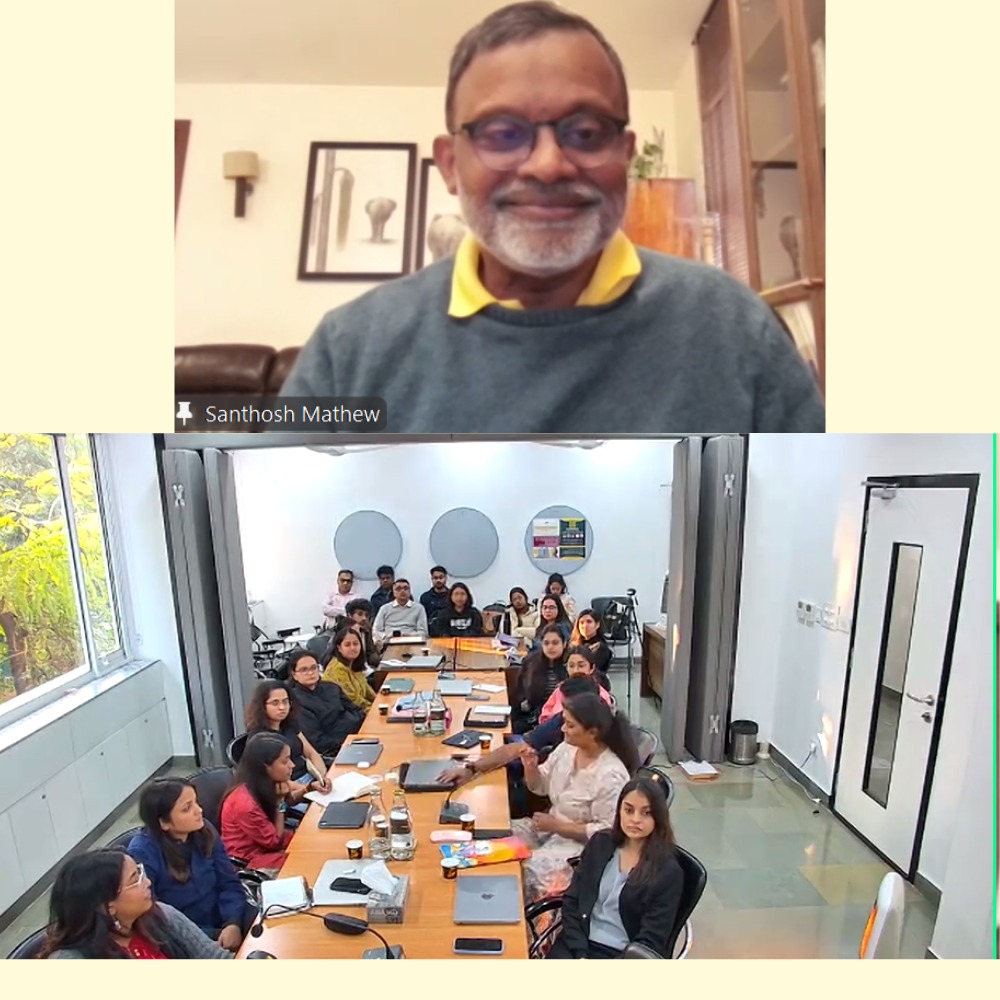
At a special lecture for the Embark India Development fellows of the Grassroots Research and Advocacy Movement (GRAAM), Dr. Santhosh Mathew brought three decades of hard-earned experience to the room and didn’t pull any punches about the realities of governance. What followed was a session that fundamentally shifted how one views the bridge between grassroots research and high-level policy.
From Bureaucracy to Building State Capacity
Dr. Mathew’s journey is remarkable: 32 years as an Indian Administrative Service officer from the Bihar cadre, followed by eight years at the Gates Foundation. His doctoral thesis, provocatively titled “State Incapacity by Design,” examined how existing government capacity is often systematically undermined by political imperatives. Blending econometrics and political science, his research reflected on firsthand observations of how bureaucratic capability gets deliberately dismantled rather than strengthened.
The Analytical Imperative
One of Dr. Mathew’s key distinctions was between field-level work and ministry-level engagement. While he designed programs like the Prime Minister’s Rural Development Fellowship for district-level implementation, he emphasized that working in central government ministries requires a fundamentally different skill set.
“When you are in a ministry in the Government of India, or a department, the skill set that you need to bring is analytical,” he explained. “It is the ability to digest vast amounts of information and to produce the notes that are required for decision making.”
This distinction is crucial for young professionals entering policy spaces; the work demands synthesis, not just execution.
Evidence Beyond Data: The Power of Lived Experience
Dr. Mathew offered a thoughtful caution against over-reliance on what he called “spreadsheet evidence.” Drawing from his experience in public administration, he reflected on how policies fall short when they overlook ground realities. particularly when multiple schemes are implemented without a cohesive, integrated vision.
He recalled a sharp analogy from his tenure: policy tools are like condiments placed before a cook tasked with preparing a well-rounded meal. The challenge lies not in the number of schemes available, but in thoughtfully combining them to foster employment, growth, and improved quality of life across urban communities.
Rethinking Urban Planning
Dr. Mathew offered a compelling example from Transport for London, where a senior leader told him: “We don’t optimize for transportation. We actually optimize for well-being and economic activity.”
This simple reframing from moving people and goods to enhancing lives allows transport authorities to consider issues like air quality that traditionally fall outside their mandate. It demonstrates how carefully crafted goals can dramatically change regulatory strategies and outcomes.
The old urban planning models focused on zoning, infrastructure, and waste management. While still important, Dr. Mathew argued that the new paradigm should center on enabling local innovation, establishing robust measurement frameworks, and facilitating cross-learning between cities globally and locally.
The Design versus Implementation Question
A recurring theme throughout the lecture was the critical distinction between design failures and implementation failures in public policy. Too often, when programs fail, the reflex is to blame poor implementation. Dr. Mathew urged fellows to question whether the policy design itself was flawed whether it was contextually appropriate, whether it accounted for local realities, and whether it was feasible given existing capacity.
This diagnostic question “is this a design problem or an implementation problem?” can save enormous resources and redirect efforts more productively.
Multi-Stakeholder Consultation: Beyond Tokenism
Dr. Mathew emphasized that genuine multi-stakeholder consultation means more than checking boxes. It requires:
- Actively seeking out diverse perspectives, especially from those directly affected by policies
- Giving weight to lived experiences, not just quantitative data
- Creating spaces where ground-level practitioners can inform policy design
- Building iterative feedback loops rather than one-time consultations
Measurement Frameworks as Ministry Goals
In his work with the Ministry of Housing and Urban Affairs, Dr. Mathew helped articulate a transformative vision: the ministry’s primary job should be establishing great measurement frameworks. Rather than directly implementing schemes, the ministry should:
- Define clear, outcome-oriented metrics for urban development
- Enable local governments to innovate within that framework
- Facilitate knowledge sharing and cross-learning
- Provide evidence on what works, where, and why
This represents a shift from command-and-control governance to enabling and measuring local innovation, a model applicable far beyond urban affairs.
Advice for Policy Practitioners
Throughout the session, Dr. Mathew offered practical wisdom for the fellows:
- Develop analytical capabilities: Learn to synthesize complex information into clear decision-making notes
- Question assumptions: Always ask whether failures stem from design or implementation
- Value multiple forms of evidence: Complement data with lived experiences and practitioner insights
- Think systemically: Consider how different policy levers interact to produce outcomes
- Focus on outcomes: Keep the ultimate goals—wellbeing, economic opportunity, quality of life at the center of policy design
Conclusion
Dr. Mathew’s lecture offered no simple formulas but rather a sophisticated framework for thinking about public policy work. His central message: effective governance requires analytical rigor, contextual understanding, humility about what data can tell us, and a relentless focus on outcomes that matter to people’s lives.
He left the room with one particularly striking image: relying solely on past data, he noted, is like driving a car while looking only in the rear-view mirror. Policymakers must combine evidence with foresight — ensuring that the lens through which policies are drafted reflects both past insights and future needs.
For fellows embarking on their government placements, his insights provide both inspiration and a reality check. The work of building better policy and stronger state capacity is neither glamorous nor quick. It requires patience, analytical skills, political savvy, and above all, a commitment to understanding problems deeply before rushing to solutions.
As India continues its development trajectory, professionals who can bridge research, policy, and implementation, who can work effectively within government while maintaining critical perspective — will be invaluable. Dr. Mathew’s career exemplifies this bridging role, and his advice offers a roadmap for the next generation of policy practitioners.