Governance Beyond Power: A Y4G Fellow’s Visit to the Capacity Building Commission under Mission Karmayogi
By Ms. Prarthana, Youth for Governance (Y4G) Fellow
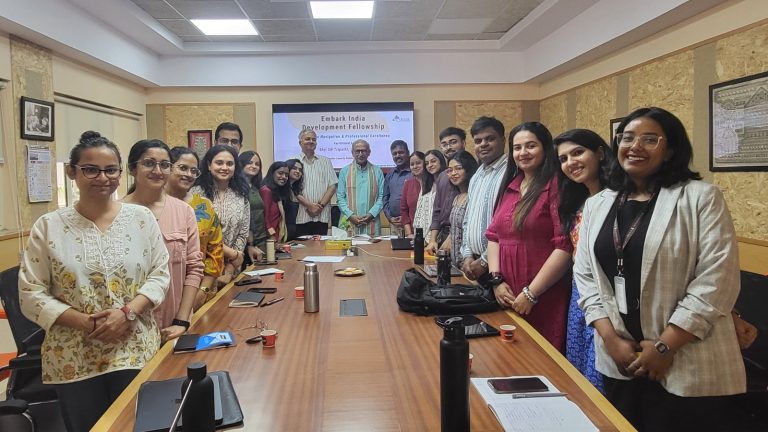
As part of my fellowship and field exposure with GRAAM (Grassroots Research and Advocacy Movement), I had the enriching opportunity to visit the Capacity Building Commission (CBC), in New Delhi, an institution functioning under the Government of India’s flagship reform initiative, Mission Karmayogi. This visit was not just an institutional exposure, but a deeply reflective experience that reshaped my understanding of governance, ethics, and public service.
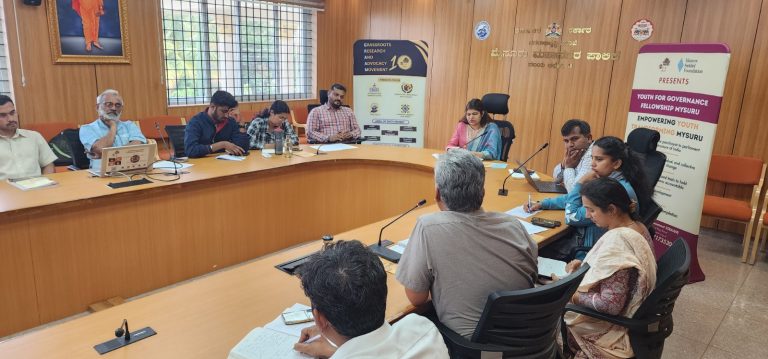
The session commenced with a welcome address that immediately set a thoughtful and inspiring tone. This was followed by a concise yet impactful overview of GRAAM’s vision, mission, and ongoing initiatives, presented by Mr. Bhagavan, GRAAM. His explanation beautifully bridged GRAAM’s grassroots interventions with the CBC’s national-level governance reforms, helping us see how local action and policy frameworks complement one another.
Understanding the Capacity Building Commission (CBC)
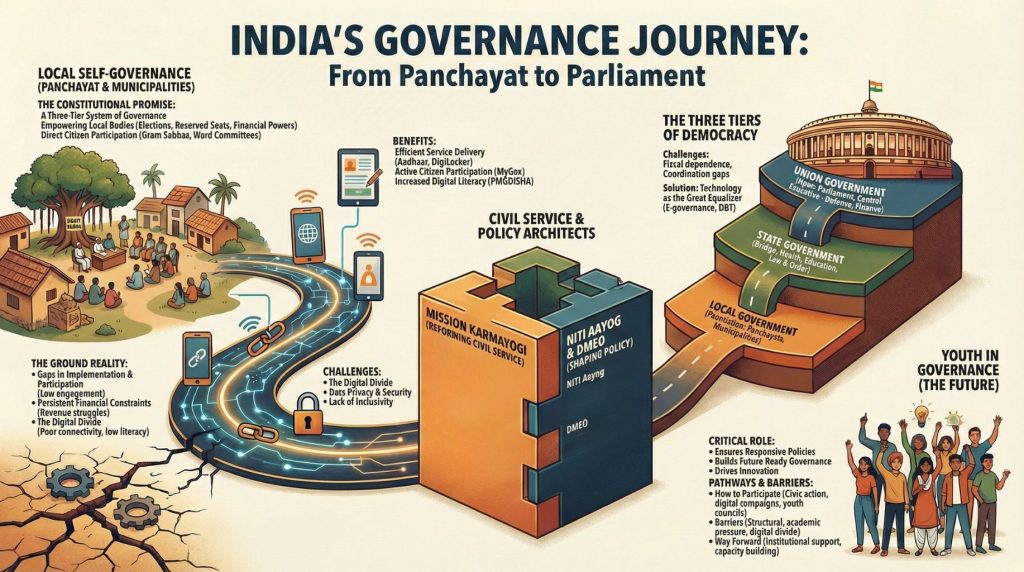
The Capacity Building Commission (Shamta Vikas Aayog) was established to implement the objectives of Mission Karmayogi, formally known as the National Programme for Civil Services Capacity Building (NPCSCB). The mission aims to transform India’s civil services into a citizen-centric, competency-driven, and ethically grounded institution.
During the interaction, we traced the historical evolution of governance—from ancient Indian statecraft during Megasthenes’ time, through the British colonial era that prioritized revenue collection and administrative control. Post-independence, this legacy largely continued, but the need for reform became evident to make governance more democratic, responsive, and humane.
Dr. R. Balasubramaniam emphasized that the idea of civil services must move beyond power and hierarchy. He profoundly stated:
“The essence of public service is not power, but principle, the principle that empowers a person to perform their duty with integrity and compassion.”
At the same time, he candidly acknowledged that power continues to dominate administrative structures, and therefore, reform must consciously reorient civil servants towards purpose, ethics, and empathy.
Key Insights from Dr. R. Balasubramaniam
Dr. R. Balasubramaniam described Mission Karmayogi not merely as an administrative reform, but as a moral and cultural transformation. He stressed that while state government employees are part of the government, they are not the government itself, a distinction that underscores the collective nature of governance.
According to him, effective governance requires coordination between state institutions, civil society organizations, and citizens, rather than centralized authority alone. He also reflected on how the increasing market-oriented mindset in governance must evolve into a citizen-first approach, where public welfare, inclusion, and dignity guide every policy decision.
As the session concluded it left us with a deep reflection on the purpose of public administration and the moral compass that must guide those entrusted with public power.
Connecting Governance and Democracy
Drawing powerful parallels between governance and democracy, Dr. R. Balasubramaniam explained how Mission Karmayogi strengthens democratic functioning by building accountability, values, and competence within civil services. He reminded us that democracy is sustained not by powerful leaders alone, but by principled public servants who embody justice, equality, and compassion in everyday administration.
This philosophy resonates deeply with GRAAM’s vision of Human-Centered Development, where empowering individuals becomes the foundation for systemic change.
A Law Student’s Reflection
As a law student and Y4G fellow, this visit was both intellectually stimulating and emotionally grounding. It offered a practical lens to understand how constitutional values under Articles 14, 19, and 21, equality, liberty, and dignity are translated into administrative action through initiatives like Mission Karmayogi.
The experience reinforced my belief that law and governance are inseparable. While law provides the framework for justice, governance ensures its realization through ethical leadership, empathy, and efficient public administration.
Conclusion
Our visit to the Capacity Building Commission was not merely observational, it was transformative. Listening to Dr. R. Balasubramaniam and witnessing the synergy between GRAAM’s grassroots work and the CBC’s national vision inspired us to see governance as a shared journey rooted in values.
As we stepped out of the 22nd floor that morning, we carried with us a renewed sense of purpose to contribute, in our own ways, to building a nation where governance is driven not by power, but by principle; not by hierarchy, but by humanity.
By
Prarthana C
Student of Law & Y4G Fellow