Introduction
Youth engagement in governance and public policy has gained increasing importance in contemporary democratic systems worldwide. Young people constitute a significant proportion of the population and represent future leaders, professionals, and decision-makers. Their participation in governance processes is essential to ensure that public policies remain responsive, inclusive, and forward-looking. Youth engagement goes beyond electoral participation and includes involvement in policy formulation, advocacy, implementation, and accountability mechanisms.
From a public health perspective, engagement in governance and policy is particularly relevant because public policies shape the social, economic, and environmental determinants of population well-being. Issues such as education, employment, housing, environment, nutrition, mental health, and social protection are deeply interconnected with governance decisions. This report examines youth engagement in governance and public policy with a focus on civic participation, leadership development, consultation platforms, digital media, and institutional support mechanisms.
Civic Participation and Leadership Development
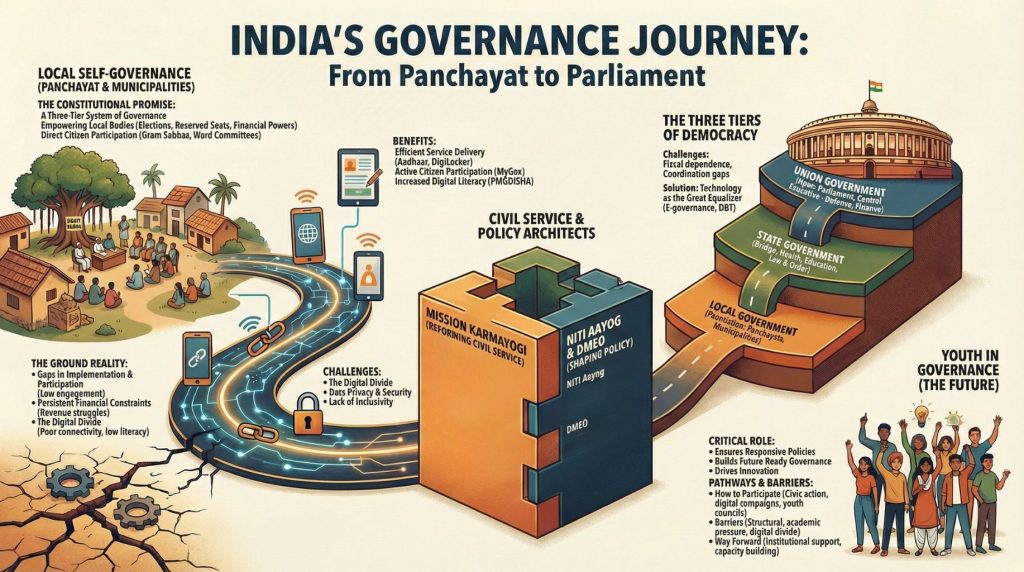
Civic participation is a foundational element of democratic governance and plays a critical role in empowering young people as active citizens. Youth civic participation includes voting, volunteering, participation in community organizations, engagement in public consultations, and involvement in local governance bodies such as ward committees and youth forums. These forms of engagement help young people develop a sense of civic responsibility and awareness of governance processes.
Leadership development among youth is equally important for strengthening governance systems. When young people are given opportunities to organize, advocate, and contribute to decision-making, they acquire essential skills such as critical thinking, communication, negotiation, and ethical leadership. For public health students, leadership development enables the application of academic learning to real-world governance challenges, allowing them to advocate for evidence-based and equity-oriented policies.
Despite its importance, youth participation often remains limited or symbolic. Decision-making power is frequently concentrated among senior stakeholders, and youth voices may be consulted without being meaningfully integrated into policy outcomes. Strengthening leadership development through mentorship, capacity-building programmes, and exposure to governance institutions is therefore essential to move toward substantive youth engagement.
Platforms for Youth Consultation and Policy Advocacy
Institutional platforms for youth consultation serve as important bridges between young citizens and policymakers. These platforms include youth councils, advisory committees, student unions, academic forums, public hearings, and stakeholder consultations. Such mechanisms provide structured opportunities for youth to express their views, contribute ideas, and engage in dialogue with decision-makers.
In recent years, digital platforms have expanded the scope of youth consultation. Online portals such as MyGov, digital surveys, and crowdsourcing initiatives allow young people to participate in policy discussions beyond traditional physical spaces. For public health students, these platforms enable advocacy on issues such as education quality, environmental sustainability, mental health, nutrition, and social equity.
However, access to consultation platforms is uneven. Youth from urban, educated, and digitally connected backgrounds are more likely to participate, while marginalized youth face barriers related to awareness, access, and confidence. Additionally, feedback mechanisms are often weak, with limited transparency regarding how youth inputs influence final policy decisions. Strengthening inclusivity and accountability within consultation platforms is critical for sustaining youth engagement.
Role of Digital Media and Online Campaigns
Digital media has emerged as a powerful tool for youth engagement in governance and public policy. Social media platforms, blogs, online petitions, and digital campaigns enable rapid dissemination of information, mobilization of public support, and amplification of youth voices. Digital engagement has been particularly effective in raising awareness of social justice, environmental protection, gender equity, and mental health issues.
For public health students, digital media offers opportunities to translate research findings into accessible formats such as infographics, short videos, and evidence-based messages. Digital campaigns can complement offline advocacy by reaching wider audiences and sustaining public discourse on policy issues. They also enable peer-to-peer learning and collective action among youth.
At the same time, digital engagement presents challenges. The digital divide limits participation for many young people, particularly in rural and low-income settings. Misinformation, superficial engagement, and performative activism can undermine meaningful policy impact. Therefore, ethical use of digital platforms, critical evaluation of information, and integration with institutional engagement are essential for effective youth advocacy.
Institutional Support for Youth-Led Governance Initiatives
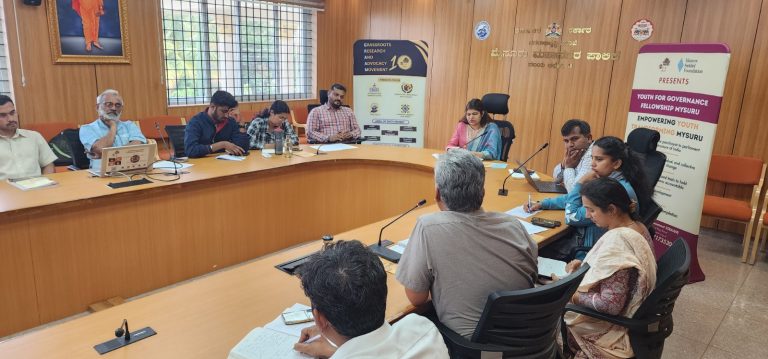
Institutional support plays a central role in enabling meaningful youth engagement in governance. Government programmes, academic institutions, civil society organizations, and research bodies provide platforms, resources, and legitimacy for youth-led initiatives. Fellowships, internships, leadership programmes, and applied research opportunities allow youth to gain practical exposure to governance processes.
For public health students, institutional engagement facilitates skill development in policy analysis, research methods, stakeholder engagement, and ethical governance. Participation in applied research and policy-oriented projects strengthens the ability to link evidence with decision-making and community needs.
However, institutional support is often fragmented, short-term, and project-based. Youth initiatives may be treated as supplementary rather than integral to governance systems. Sustained engagement requires long-term investment, mentorship, and clear pathways for youth participation within formal policy processes.
Challenges to Youth Engagement in Governance and Policy
Several challenges limit effective youth engagement in governance and public policy. Structural barriers include limited access to decision-making spaces, power imbalances, and bureaucratic hierarchies. Social and economic constraints such as academic pressures, employment insecurity, and time limitations further restrict sustained participation.
Digital challenges, including unequal access to technology and exposure to misinformation, also affect youth engagement. From a public health perspective, these barriers reflect broader social determinants such as education, digital literacy, and social inclusion. Addressing these challenges requires coordinated efforts across governance, education, and development sectors.
Way Forward: Strengthening Youth Engagement
Strengthening youth engagement in governance requires a multi-dimensional approach. Institutionalized platforms for youth participation should be strengthened and made inclusive of marginalized groups. Capacity-building and leadership development programmes should be integrated into academic and governance institutions. Digital advocacy should be complemented with offline engagement to ensure meaningful policy impact.
Public health students can play an important role by contributing evidence-based perspectives, engaging in applied research, and advocating for equitable and preventive policy approaches. Recognizing youth as active partners rather than passive beneficiaries is essential for building accountable and future-ready governance systems.
Conclusion
Youth engagement in governance and public policy is essential for strengthening democratic processes and ensuring inclusive and sustainable development. Civic participation, leadership development, consultation platforms, digital media, and institutional support collectively shape the effectiveness of youth engagement. For public health students, involvement in governance provides opportunities to address upstream determinants of well-being and contribute to evidence-informed policy making.
Strengthening institutional mechanisms, ensuring inclusivity, and creating meaningful pathways for youth leadership are critical to realizing the full potential of youth engagement in governance and public policy.
By:
Lakshmi R M
Masters in public health student
Youth for governance Fellowship student, GRAAM