GRAAM joins Skill Conclave 2026 as Knowledge Partner, bringing research-driven insights to strengthen demand-based skilling, industry collaboration and future-ready employment opportunities in Thoothukudi.
Building a Future-Ready Workforce for Thoothukudi
As industries evolve and emerging technologies reshape employment opportunities, building a skilled and adaptable workforce has become essential to sustainable economic development. Strengthening the connections between education, industry requirements and employment opportunities is particularly important for districts experiencing industrial growth and economic transformation.
Recognising this need, the Thoothukudi District Administration organised Skill Conclave 2026 – on 30 September 2026 at SRM Hotel, Thoothukudi, bringing together representatives from government, industry, academia, skill-development institutions and development organisations.
Grassroots Research and Advocacy Movement (GRAAM) participated as the Knowledge Partner, contributing research-based insights to inform discussions on the district’s evolving skill requirements and opportunities for strengthening its skilling ecosystem.
The Conclave provided a collaborative platform to examine current workforce challenges, identify emerging industry demands and explore strategies for creating an inclusive, demand-driven and future-ready skill-development ecosystem.
Strengthening Collaboration for Demand-Driven Skill Development
The Conclave was designed to facilitate meaningful engagement between government institutions, industries, academic institutions and development partners, recognising that effective skill development requires coordinated efforts across multiple stakeholders.
Discussions centred on strengthening industry–academia–government partnerships, aligning training programmes with labour market requirements and expanding opportunities for employment and livelihoods.
Particular emphasis was placed on four sectors central to Thoothukudi’s evolving economic landscape: Manufacturing & Automobiles, Shipping, Space Technologies and Renewable Energy.
These sectors present opportunities for industrial growth, technological advancement and workforce development. However, translating these opportunities into meaningful employment requires a deeper understanding of existing skill gaps, future workforce requirements and institutional capacities.
The Conclave sought to bridge these gaps by bringing together stakeholders responsible for shaping both the demand and supply sides of the district’s skill ecosystem.
Setting the Context: Leadership Perspectives on Skills and Economic Growth
The Conclave commenced with an inaugural session that established the broader vision for strengthening Thoothukudi’s skill-development landscape.
Thiru. Vishu Mahajan, I.A.S., District Collector, Thoothukudi, delivered the Welcome Address, followed by the Keynote Address by Dr. S. Vijayakumar, I.A.S., Additional Chief Secretary, Industries, Investment Promotion & Commerce Department.
The inaugural session also featured special addresses by distinguished representatives from government, industry promotion and the skill-development ecosystem, including:
- Thiru. S.A. Raman, I.A.S., Managing Director, State Industries Promotion Corporation of Tamil Nadu (SIPCOT)
- Tmt. Kavitha Ramu, I.A.S., Managing Director, Tamil Nadu Skill Development Corporation
- Dr. C. Palani, I.A.S., Director, Employment and Training
- Thiru. Vaibhav Chauhan, Associate General Manager, HCL Foundation
The participation of senior government officials and institutional leaders highlighted the importance of coordinated planning, industry responsiveness and collaborative action in strengthening the district’s workforce capabilities.
From Research to Dialogue: GRAAM’s Skill Needs Assessment
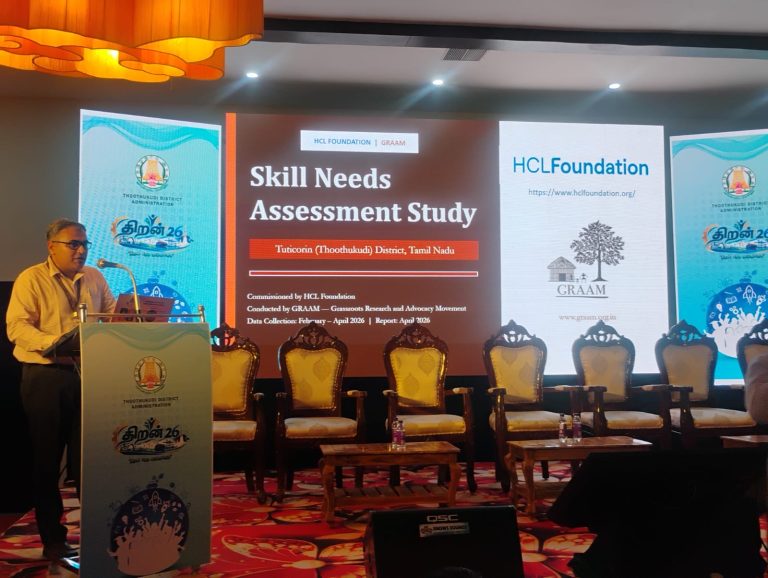
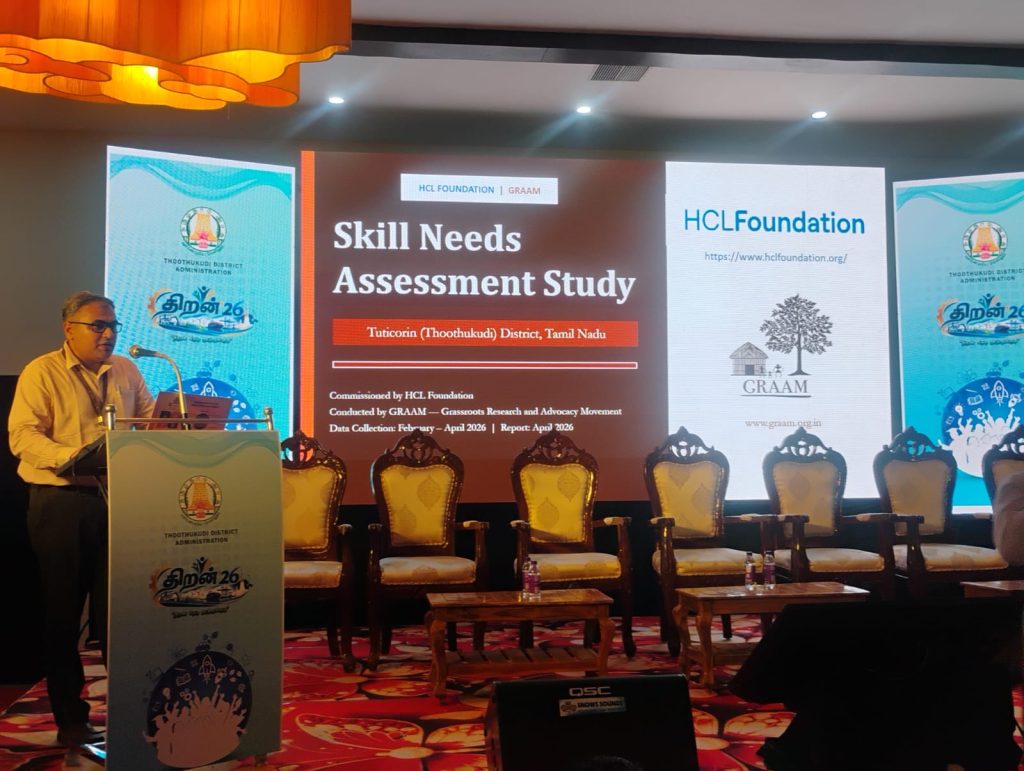
A key highlight of the Conclave was the presentation of findings from the Demand Study of Thoothukudi’s Skilling Needs by Sarath Kalliat, Head – Research & Evaluation, GRAAM.
The presentation served as a context-setting session, providing an evidence-based foundation for the sectoral discussions that followed.
Drawing attention to the district’s skill requirements, industry demand and opportunities for strengthening local training systems, the study helped frame conversations around aligning skill-development interventions with actual employment opportunities.
The findings underscored the importance of moving beyond conventional training approaches towards demand-driven skilling strategies informed by industry expectations, emerging job roles and changing labour market conditions.
For GRAAM, the presentation reflected its broader commitment to ensuring that research contributes meaningfully to policy discussions, institutional planning and development action.
Sectoral Dialogues: Preparing for Emerging Industry Opportunities
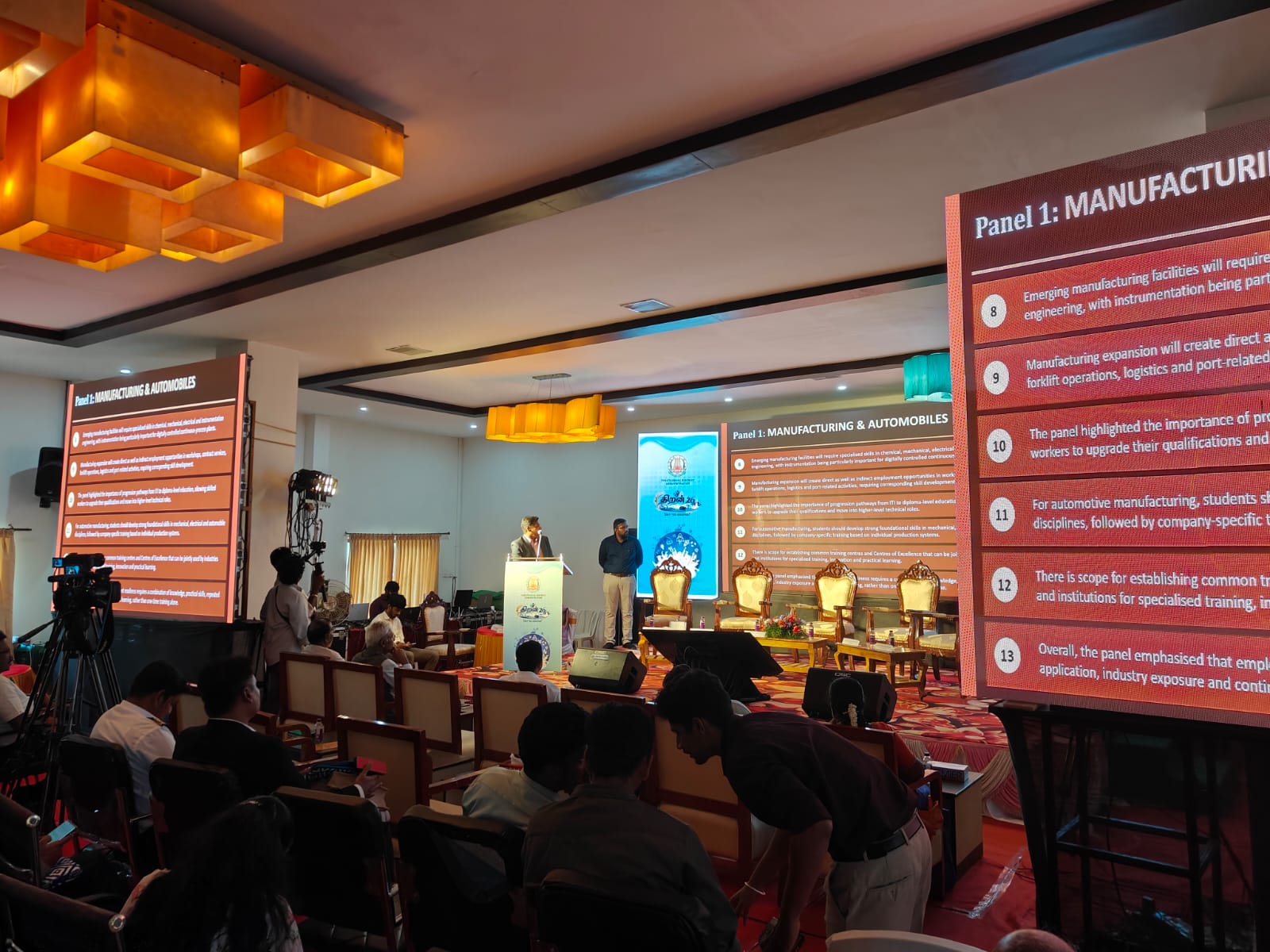
Following the research presentation, the Conclave featured focused panel discussions across four priority sectors, exploring the workforce capabilities required to support Thoothukudi’s current and future economic development.
Manufacturing & Automobiles
Discussions examined changing industry requirements, technical competencies, workforce readiness and the importance of strengthening linkages between industries and training institutions. Participants explored opportunities to improve curriculum relevance, practical training and apprenticeship pathways to support employment in the manufacturing ecosystem.
Renewable Energy
With growing opportunities in clean energy and sustainable industries, discussions focused on emerging technical skills, future workforce requirements and the need to prepare local youth for employment opportunities within the renewable energy sector.
Shipping and Maritime Industries
The maritime sector discussions highlighted the importance of developing a future-ready workforce equipped with industry-relevant technical competencies and an understanding of emerging technologies. Strengthening industry–institution linkages and expanding specialised training opportunities were recognised as important areas for consideration.
Space Technologies
Recognising the potential of the emerging space economy, discussions explored opportunities to equip young people with relevant technical skills, encourage innovation and strengthen pathways towards careers in space-related industries and technologies.
Across all four sectors, the discussions reinforced the importance of aligning educational and training systems with evolving industry requirements, strengthening practical learning opportunities and ensuring that local communities can benefit from emerging economic opportunities.
Translating Dialogue into Action: Strengthening the District Skill Ecosystem
An important outcome of the Conclave was the emphasis on translating research findings and stakeholder discussions into practical strategies for district-level skill development.
The programme concluded with a “Way Forward – From Dialogue to Action” session focused on the District Skill Action Plan and the future direction of Thoothukudi’s skilling ecosystem.
The discussions highlighted the potential for research evidence, industry perspectives and institutional collaboration to inform a more responsive and coordinated approach to skill development.
Key priorities emerging from the Conclave included:
- Demand-Driven Skilling: Aligning training programmes with existing and emerging industry requirements.
- Industry–Academia Collaboration: Strengthening partnerships between industries, academic institutions and training providers to improve workforce readiness.
- Future Skills Development: Preparing young people for technological advancement and employment opportunities across emerging sectors.
- Employment and Apprenticeship Pathways: Strengthening practical training, industry exposure and transitions from skill development to meaningful employment.
- Institutional Convergence: Encouraging coordinated efforts among government departments, industries, skill-development institutions and development partners.
These priorities offer valuable directions for strengthening the District Skill Action Plan and building a skilling ecosystem responsive to both immediate employment needs and long-term economic opportunities.
Advancing Evidence-Based Development through Partnerships
For GRAAM, Skill Conclave 2026 represented an important opportunity to take research beyond the report and connect evidence with institutional dialogue and actionable development priorities.
As Knowledge Partner, GRAAM’s engagement reflected its commitment to bridging research, policy and practice by contributing insights that can strengthen planning and decision-making.
The Conclave also demonstrated the importance of collaborative platforms where diverse stakeholders can exchange perspectives, identify shared priorities and work towards practical solutions.
GRAAM acknowledges the collective efforts of the Thoothukudi District Administration, HCL Foundation, the Guidance and Skill teams, participating government departments, the Project Management Unit (PMU), industry representatives, academic institutions, training organisations, panellists and participants whose contributions supported the planning, coordination and successful conduct of the Conclave.
The collective engagement of these stakeholders reinforced the value of partnerships in addressing complex skill-development challenges and creating opportunities for inclusive economic participation.
Looking Ahead: From Skills to Sustainable Livelihoods
Skill Conclave 2026 established a foundation for continued collaboration towards developing a skilled, inclusive and future-ready workforce for Thoothukudi.
Building on the momentum generated through the discussions, there is an opportunity for the Conclave to evolve into an annual platform for reviewing emerging workforce requirements, strengthening institutional partnerships, facilitating convergence and monitoring progress towards district-level skill-development priorities.
Such sustained engagement can help ensure that industrial growth and emerging economic opportunities translate into tangible benefits for local communities, particularly young people seeking meaningful employment and sustainable livelihoods.
As Thoothukudi continues to strengthen its industrial and economic potential, investing in relevant skills, responsive institutions and collaborative partnerships will remain central to building an inclusive development pathway.
The journey from evidence to action requires continuous collaboration, informed decision-making and a shared commitment to ensuring that skills translate into opportunities.
From evidence to action. From skills to opportunities. Towards a future-ready Thoothukudi.
Watch Skill Conclave 2026
Explore the discussions, research insights and sectoral deliberations from the Conclave.
Watch the Full Skill Conclave 2026 on YouTube
#GRAAM #SkillConclave2026 #Thoothukudi #SkillDevelopment #YouthEmpowerment #EvidenceToAction #FutureReadyWorkforce #IndustryAcademiaCollaboration #SustainableLivelihoods #DemandDrivenSkilling