
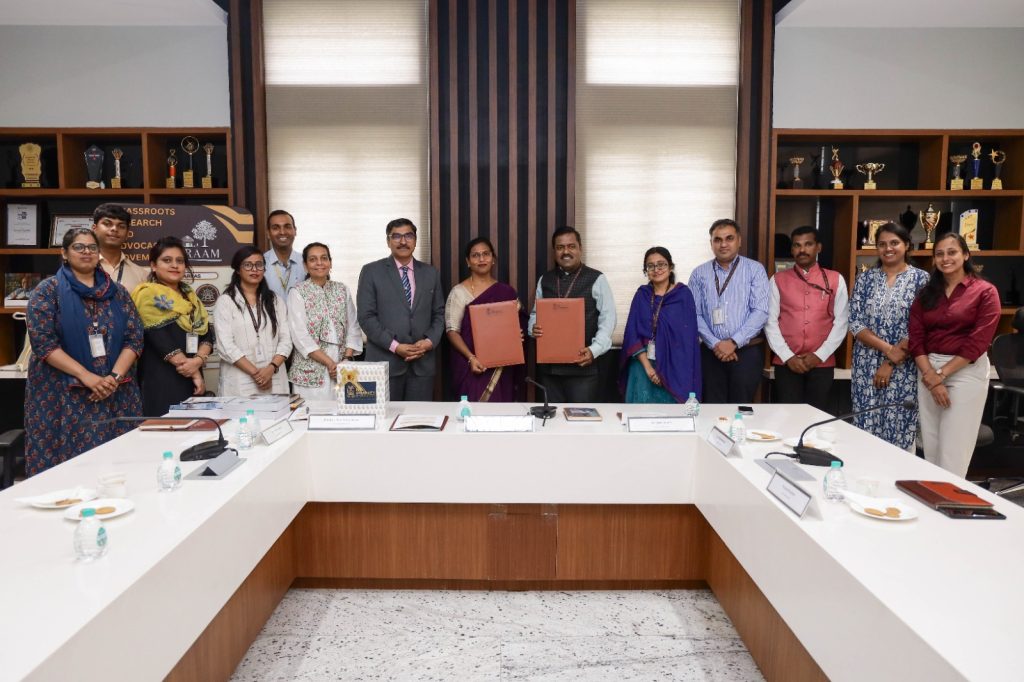
What if the future of development was shaped not only in classrooms or policy corridors, but also in villages, communities, and innovation labs?
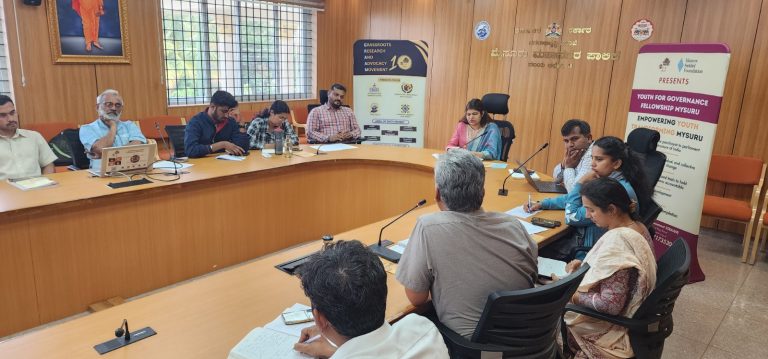
This is the vision that underpins the renewed partnership between GRAAM (Grassroots Research and Advocacy Movement) and RV University. More than the signing of a Memorandum of Understanding, the collaboration represents a shared commitment to reimagining how knowledge is created, applied, and translated into meaningful social impact. By bringing together university researchers, public policy experts, and local communities, this collaboration aims to bridge the gap between classroom theory and on-the-ground reality.
As India navigates increasingly complex development challenges, solutions can no longer emerge from a single discipline. They require the collective strength of academia, technology, public policy, behavioural sciences, and grassroots experience. This partnership seeks to bring these worlds together through collaborative research, innovation, and action.
A Vision Beyond Collaboration
At the heart of the partnership is an ambitious vision, to establish a collaborative Centre of Excellence that advances the intersections of development, technology, Artificial Intelligence, and public policy.
The proposed platform will serve as a living ecosystem where researchers, students, policymakers, technologists, and development practitioners co-create solutions to some of India’s most pressing governance and social challenges.
By combining GRAAM’s extensive grassroots experience with RV University’s multidisciplinary academic expertise, the partnership aims to generate evidence that not only informs policy but also improves lives on the ground.
Empowering the Next Generation of Change Leaders
A key pillar of the collaboration is investing in Gen Z and young leaders.
As highlighted by Dr. Basavaraju R. Shreshta, Executive Director of GRAAM, the language of development is rapidly evolving. Today’s youth learn differently, innovate differently, and engage with society through technology in ways that previous generations could not have imagined.
Preparing the next generation therefore requires moving beyond traditional classrooms and creating opportunities where students actively work alongside communities, researchers, governments, and industry.
The partnership seeks to provide immersive learning experiences through:
- Collaborative research projects
- Policy innovation and governance initiatives
- AI-enabled development solutions
- Community immersion programmes
- Behavioural and evidence-based research
- Fellowships, internships, and multidisciplinary learning opportunities
Through these and many more collaborative initiatives, the partnership aims to engage students with real-world development challenges, nurturing professionals who can bridge theory with practice and transform ideas into impact.
Where Technology Meets Grassroots Reality
Artificial Intelligence is changing how societies communicate, learn, govern, and solve problems. Yet technology delivers meaningful impact only when it responds to real community needs.
Rather than viewing AI as an isolated technological advancement, the partnership positions it as a catalyst for inclusive, evidence-driven, and people-centred development.
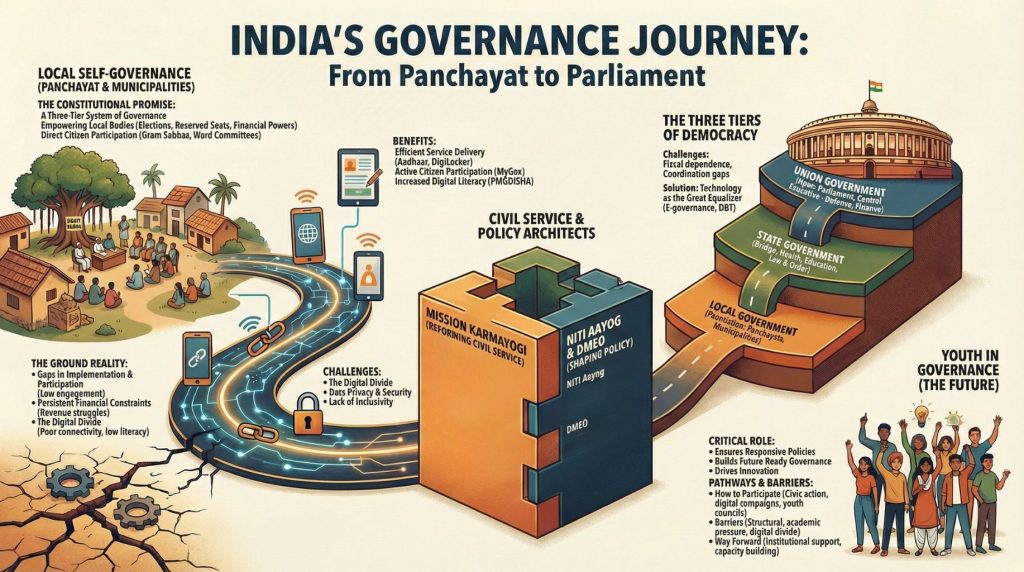
From strengthening local governance and improving citizen participation to designing customised capacity-building programmes and supporting evidence-informed policymaking, technology can make development more accessible, responsive, and people-centred.
The proposed Centre of Excellence will explore how emerging technologies, combined with grassroots insights, can generate scalable solutions that benefit communities across India.
Key Takeaways
- A Centre of Excellence for Future-Ready Development – Creating a collaborative platform that integrates development, Artificial Intelligence, technology, and public policy to generate innovative, evidence-based solutions for India’s evolving governance challenges.
- Empowering the Next Generation of Leaders – Creating immersive pathways for young leaders to engage in policy research, AI innovation, grassroots action, and multidisciplinary learning.
- Bridging Academia with Grassroots Action – Connecting academic excellence with community realities to ensure research translates into actionable policies, inclusive governance, and measurable social impact.
- Driving Collaborative Innovation for Nation Building – Strengthening partnerships among academia, policymakers, development practitioners, and communities to co-create scalable solutions that contribute to an equitable, sustainable, and resilient India.
Join the Conversation
How can academia, technology, and youth leadership come together to shape the future of public policy and development? Share your thoughts below!



Dear sir, Great initiative. I will happy to learn more about this activity. Regards, Ramana