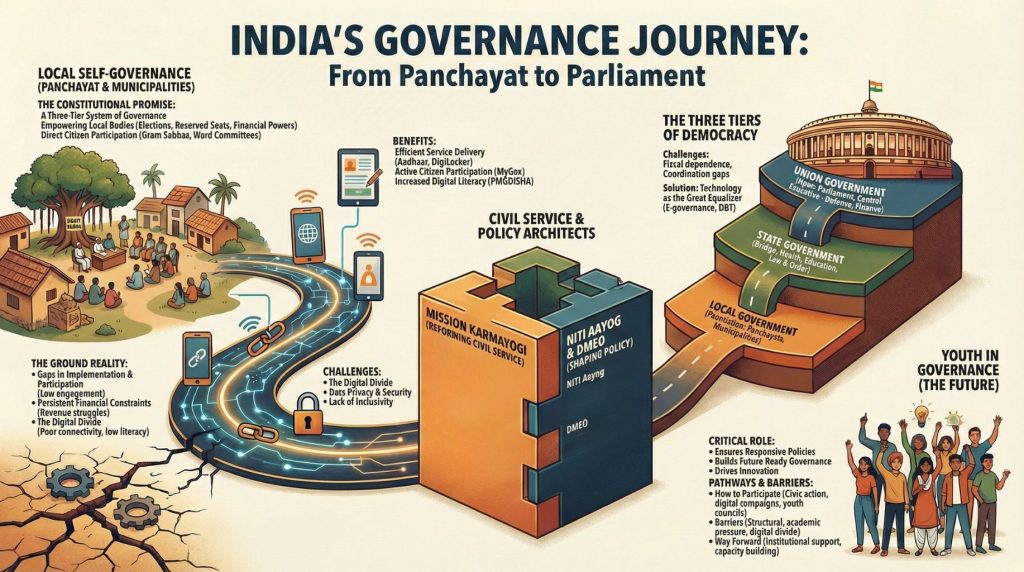
What actually happens inside the Vidhana Soudha when the Legislative Assembly is in session? How does a Bill become a law? And what happens when there is a disruption in the House?
For the Youth Fellows of the *Youth for Governance (Y4G) Fellowship*, these were no longer questions confined to textbooks.
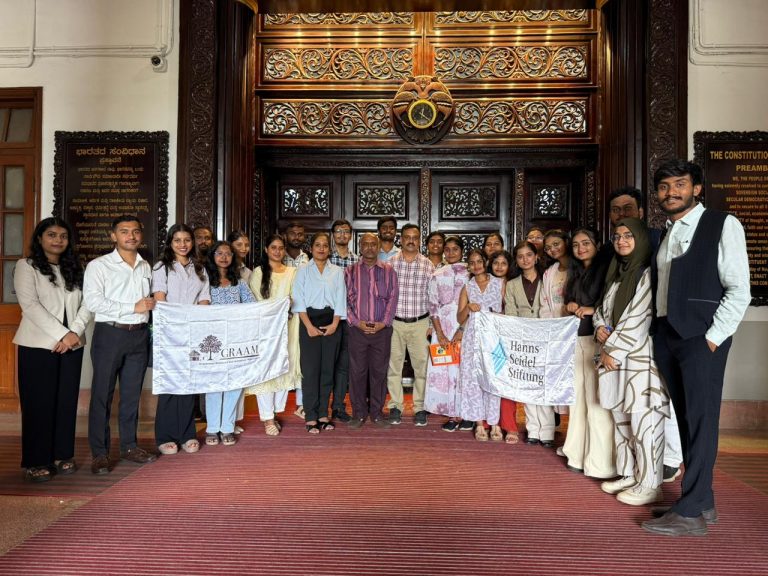
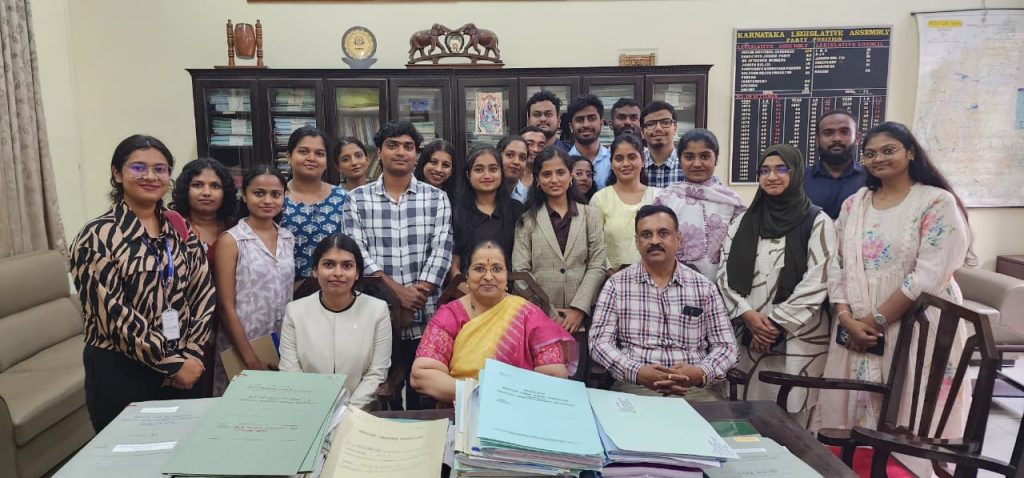
As part of their exposure visit to *Vidhana Soudha*, the fellows had an opportunity to step inside one of Karnataka’s most important democratic institutions and understand how the State Legislature functions in practice.
From the Speaker’s role to the functioning of the House
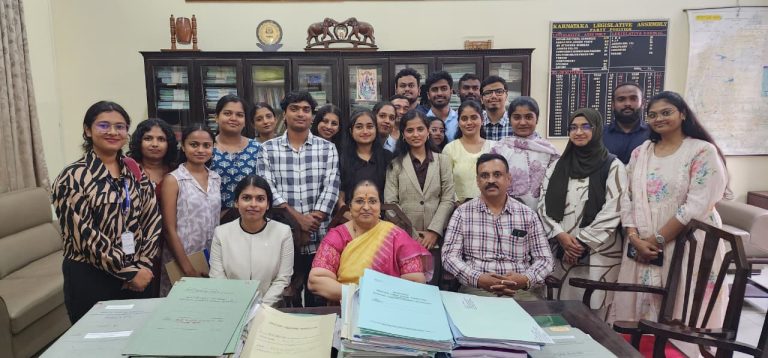
A key highlight of the visit was an interaction with *Smt. M. K. Vishalakshi, Secretary, Karnataka Legislative Assembly.
She introduced the fellows to the functioning of the Legislative Assembly and explained the roles and responsibilities of key actors within the House, including the *Speaker and elected members*.
The fellows learnt how members are positioned in the Assembly, how proceedings are conducted, and how debates and discussions on issues of public importance take place.
The conversation also covered an aspect of legislative functioning that is often less visible from the outside: *what happens when proceedings are disrupted?* Smt. Vishalakshi explained the procedures and rules followed by the House in such situations, giving the fellows a practical understanding of how parliamentary discipline and procedure work together.
How does a Bill become a law?
One of the most important takeaways from the session was understanding the journey of a *Bill*.
Rather than simply learning that laws are “made in the Assembly,” the fellows explored the steps involved—from the introduction of a Bill to its discussion, debate and voting, and the processes through which it may ultimately be approved or rejected.
This helped answer an important question for anyone interested in governance:
How does an idea for change actually move through a democratic institution and become part of the law-making process?
Understanding these procedures also highlighted why rules, deliberation and informed participation are essential to the functioning of a Legislature.
Learning through questions
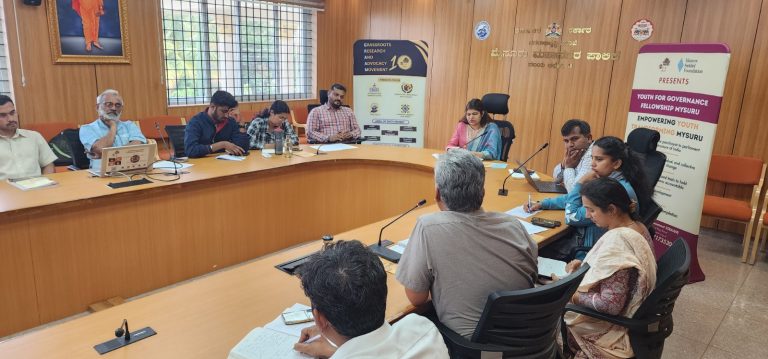
The interaction was not a one-way session. Smt. Vishalakshi actively encouraged the Youth Fellows to ask questions and responded to their queries with clarity and practical insights.
This open exchange helped transform what can often seem like complex institutional processes into something much more accessible.
For the fellows, the experience was an opportunity to connect what they learn about governance, democracy and public policy with the institutions where these processes actually unfold.
Beyond the classroom
Visits like these remind us that understanding governance goes beyond knowing how institutions are structured. It is also about seeing how they function, how decisions are made and how elected representatives participate in democratic processes.
For young people preparing to engage with governance and public life, such first-hand experiences can help build a deeper understanding of the systems they may one day contribute to, question and strengthen.
Key Takeaway
Democracy becomes more meaningful when young people can see it in action.
By engaging directly with democratic institutions, the Y4G Youth Fellows are gaining a practical understanding of law-making, representation and governance one experience at a time.
Join the Conversation
If you had the opportunity to visit your State Legislature, what would you want to ask?