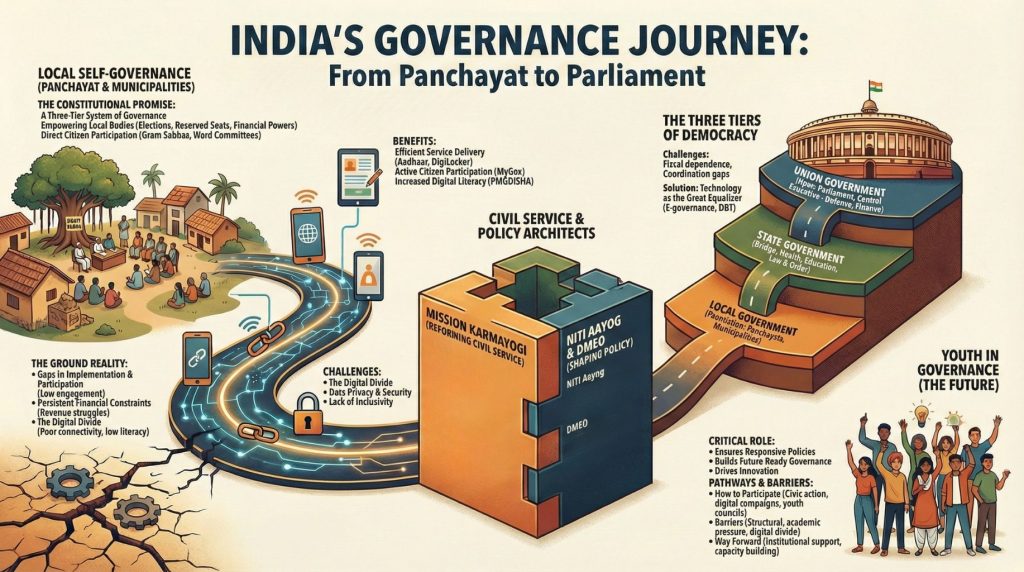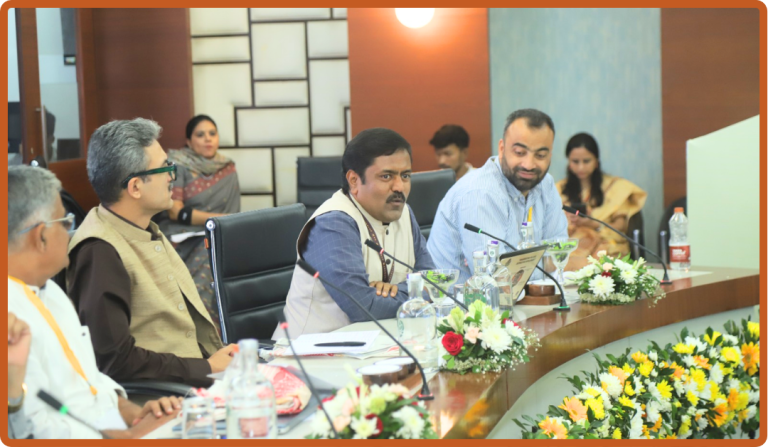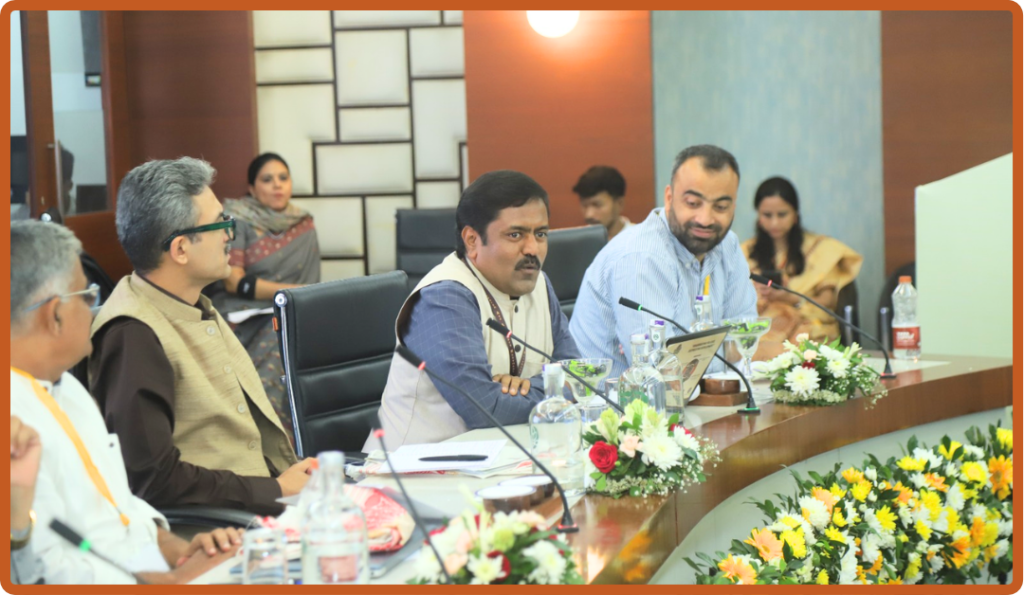
Digital tools and spatial maps can transform rural planning, but technology alone cannot build community agreement. At the NITI–State Workshop Series on “Viksit Panchayat” in Guwahati, Dr. Basavaraju R. Shreshta, Executive Director of GRAAM, shared how local governance thrives when data is paired with authentic community participation.
Addressing policymakers, Panchayati Raj officials, and civil society leaders, the discussion highlighted a critical reality: while platforms like SVAMITVA provide essential spatial data, sustainable development relies on people coming together. To turn data into real-world action, capacity building must move beyond traditional classroom lectures at district headquarters. Shifting toward “Living Labs” within active Gram Panchayats allows elected representatives and local functionaries to learn through practical, hands-on experience.
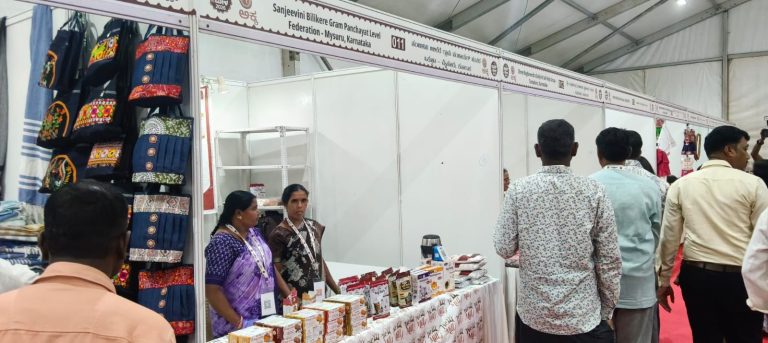
Drawing from field models developed in Mysuru, the initiative demonstrated the power of embedding public health and social work students directly with local councils. This approach helped villagers co-create granular social and health maps without heavy administrative burdens. Furthermore, engaging local youth and reactivating village-level committees ensures that planning reflects everyday community needs, from public safety to sanitation. Grounding digital tools in grassroots consensus creates a resilient blueprint for inclusive local development.
Key Takeaways & Impact
Participatory Planning: Combined spatial technology with community consensus to strengthen local Panchayat development plans.
Practical Capacity Building: Replaced static lectures with immersive “Living Labs” inside active Gram Panchayats.
Youth & Academic Inclusion: Engaged local youth and university students to co-create accurate, village-level social and health maps.
Join the Conversation
How can digital planning tools best be combined with community participation in rural governance? Share your thoughts below!