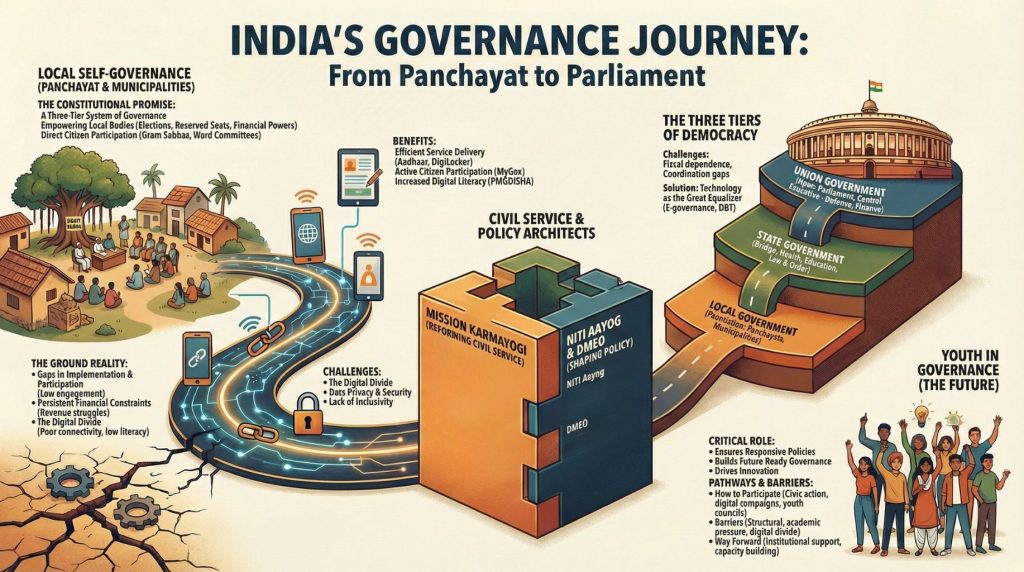
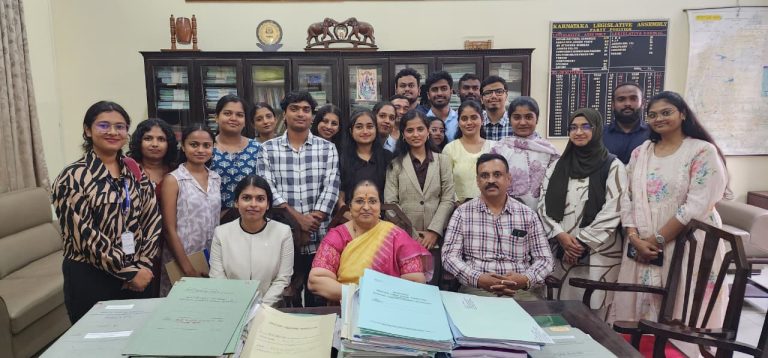
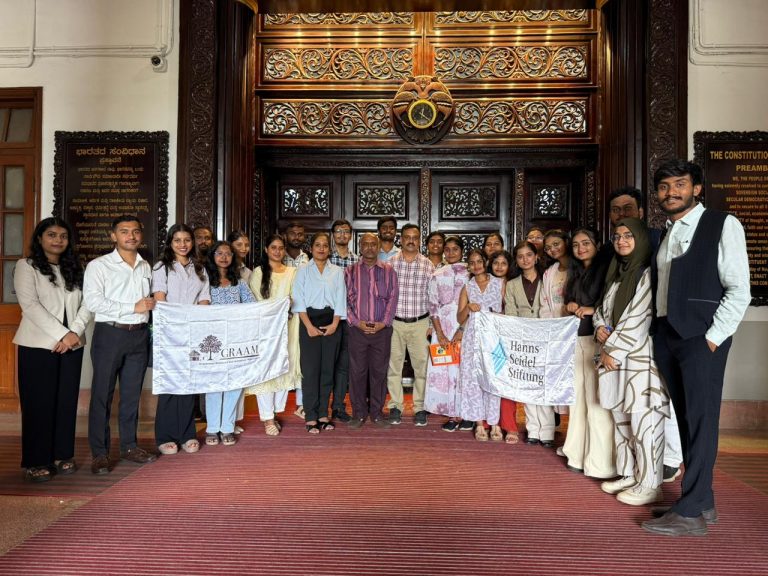
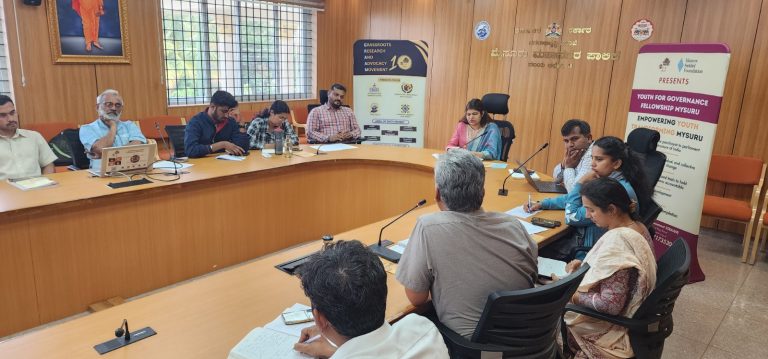
The Youth for Governance / Y4G’s May Month looked into the Session Introduction to Indian Constitution.
This Project is supported by Hanns Seidal Foundation, 2025.
This session was conducted on 11th May 2025, Sunday via Zoom online.
GRAAM overall had 30 Participants who were between the age group of 20-50 years.
The Presenter for this session was Prof. Tejaswini, Dept. of Law. University of Mysuru and was supported by Mr.Bhagavan Bidarakote and Mr.Pavan M Bommanahalli.
The reason for the session is to Understand the constitution not just as a legal document but as a living framework guiding governance, policy, and citizen action in India.
The course started by introduction of the Speaker Prof Tejaswini and the Participants by Mr. Pavan.
Prof. Tejaswini began the session by discussing and using relevant examples to explain on
- Historical context of the Indian Constitution, when the drafting process began, how it was formulated, and the key members involved in its creation
- Preamble, explaining each of its components in detail
- Outlines of the structure of the Indian Government, with a focus on the Legislature and Judiciary
- Directive Principles of State Policy, emphasizing how they influence policy making in India.
The session concluded with a Q&A segment, during which the fellows actively engaged with the speaker by asking questions. Overall, the session was informative and interactive.
Outcomes of the session –
The session led to four key outcomes –
- The fellows gained a foundational understanding of the Indian Constitution’s origin, including how and when it was drafted and the key figures involved
- They developed a clear interpretation of the Preamble, enabling them to appreciate the core values and vision it sets for the nation
- The session clarified the structure and functioning of the Indian Government, particularly the roles of the Legislature and Judiciary, supported by relatable examples
- Participants became aware of how the Directive Principles of State Policy influence policy making, helping them connect constitutional values with real-world governance practices.
Next Steps
The Y4G training will be conducted on similar topics related to Constitution, Governance and Policy
Remarks
The session was insightful and well-structured, effectively bridging theoretical aspects of the Constitution with practical governance insights. Prof. Tejaswini’s clear explanations and engaging delivery helped fellows grasp complex concepts with ease. The interactive discussions further enriched the learning experience, making the session both informative and thought-provoking. Overall, it was a valuable opportunity for the fellows to deepen their understanding of constitutional values and governance systems.