In the vast landscape of the Indian public education system, particularly in Karnataka, traditional, hierarchical, and teacher-centric methods of schooling are being challenged by innovative participatory models. Democratizing the educational environment is recognized as a cornerstone of rights-based development and modern civic education. Rather than viewing children as passive listeners in a classroom, these models reposition them as active decision-makers in school organizational governance.
The Grassroots Research and Advocacy Movement (GRAAM) has translated this structural transformation from theory into practical reality through its ‘Sugamya Shiksha’ program. Operating across 38 government schools in six districts of Karnataka, including Mysuru, Hassan, and Chikkaballapur, this initiative aligns the aspirations of the National Education Policy 2020 (NEP 2020) with school management and community engagement.
The Mechanics of the Student Parliament
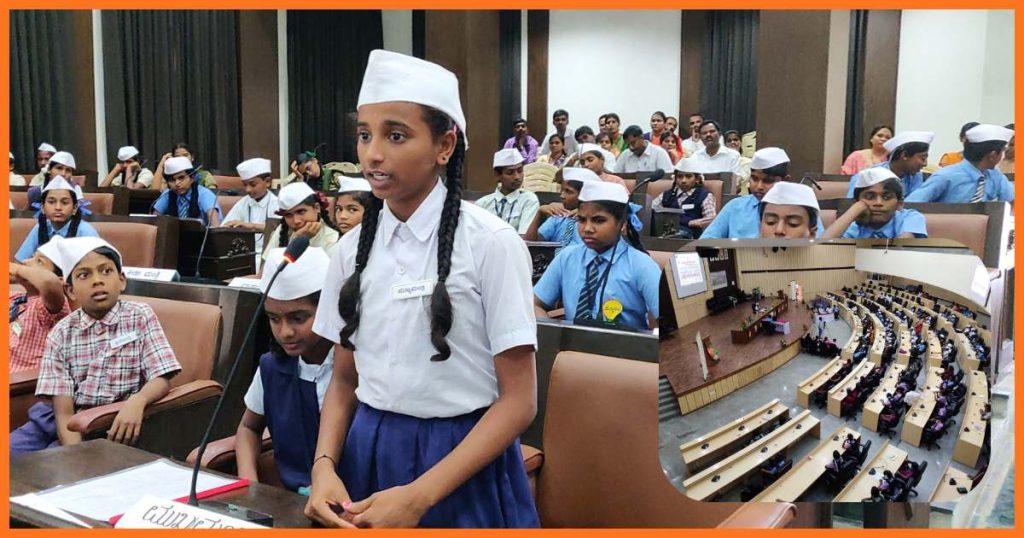
The School Cabinet, or Student Parliament, addresses the critical lack of meaningful student agency in school-level decision-making processes. Operating as a children’s democracy “of the students, by the students, and for the students,” it sows democratic values and builds leadership qualities early in life. Elected student representatives work alongside mentor teachers, School Development and Monitoring Committees (SDMCs), and other stakeholders to manage academic progress and organize school activities.
To build democratic awareness, elections are organized formally. For instance, at the Metagalli Government School in Mysuru, the election process mirrored the National Election Commission’s protocols, complete with nomination filings and classroom campaigns. Over 140 students cast their votes using modern mobile technology alongside traditional methods, introducing children to the concept of “digital democracy”. The resulting parliament consists of a Student Prime Minister and 12 to 18 portfolio ministers who actively oversee the daily operations of their respective departments rather than serving as mere symbolic figures. While the school cabinet handles internal management, district-level student parliaments act as higher platforms for broader public advocacy.
Portfolios and Real-World Campus Impact
The 38 participating government schools have proven that public education can serve as an incubator for responsible citizenship. Student Prime Ministers and Deputy Prime Ministers regularly hold meetings, prepare annual action plans, and attend SDMC meetings to confidently present school grievances. The specific ministerial portfolios drive tangible improvements across the campuses:
- Horticulture Minister: Leads the development of school kitchen gardens, supplying fresh vegetables and greens for the Akshara Dasoha (midday meal) scheme, moving schools toward self-reliance.
- Health Minister: Conducts biannual health check-ups, reviews personal hygiene during morning prayers, administers first aid, and coordinates medical care for sick children, which has successfully improved student attendance.
- Information Minister: Reads daily news highlights, manages the school library, writes motivational quotes on notice boards, and shares school achievements with local media.
- Education Minister: Acts as an academic role model, identifies and encourages dropouts or lagging students, and manages group activities when teachers are unavailable.
- Irrigation Minister: Ensures adequate water supply for drinking, sanitation, and kitchen gardens, oversees weekly water tank cleaning, manages rainwater harvesting systems, and promotes water conservation.
- Sports & Cleanliness Ministers: Organize sports equipment, install dustbins in every classroom, build soak pits, and maintain the aesthetic upkeep of school grounds and restrooms.
- Finance & Cultural Ministers: Mobilize funds from communities and donors to organize annual days and cultural competitions while ensuring strict hygiene standards among the mid-day meal cooking staff.
Beyond the School Gates: Community and Social Transformation
The impact of the Student Parliament extends far beyond the school walls, addressing deep-rooted community issues. When student parliaments flagged local issues like electricity shortages, delayed scholarship distribution, menstrual hygiene deficiencies, and traffic hazards, local administrations and police departments responded immediately with repair orders and barricades. Furthermore, student parliaments successfully ran drives to track down dropout children and re-enroll them in schools across the six districts.
The Sugamya Shiksha model has also revitalized the traditionally adult-dominated SDMCs. By introducing “Chapati Mapping”, a participatory tool where parents, alumni, and current students draw a pie-chart-style map to prioritize school infrastructure needs, the community was galvanized. Inspired by the student ministers’ presentations, SDMC members and villagers in the Metagalli and Koorgalli panchayats voluntarily donated over ₹5 lakhs worth of physical equipment for infrastructure development.
At a protective level, awareness of the Childline helpline (1098) has increased substantially. Children have personally called the helpline to stop child marriages planned for themselves or their peers. In certain villages, student-led resolutions heavily influenced village elders, forcing the relocation of liquor shops away from school transit routes.
The model has successfully rewritten child identities within conservative setups. For instance, a student named Venu, who previously lacked interest in the traditional curriculum and frequently skipped classes, completely changed his outlook after being given a leadership role within the parliament framework. The assigned responsibility gave him a sense of belonging and agency, keeping him engaged in school. Similarly, a student named Reshma, from a community where early marriage is customary, used her cabinet position to advocate for her education. She and her friends formed the ‘Savitribai Phule Team’ (Meena Team) to discuss girls’ safety, nutrition, and health. Her dedication to managing the school waste incinerator and leading awareness rallies shifted the mindsets of local parents.
Ultimately, this initiative aligns perfectly with India’s National Education Policy (NEP) 2020 and matches global benchmarks by contributing directly to the United Nations Sustainable Development Goals (SDGs), specifically Goal 3 (Good Health and Well-being), Goal 4 (Quality Education), and Goal 5 (Gender Equality).
Key Takeaway / Impact – The ‘Sugamya Shiksha’ initiative has demonstrated that student parliaments are highly effective vehicles for experiential learning, civic responsibility, and leadership development. By converting schools into laboratories of democracy, the model has triggered profound social impacts, including the prevention of child marriages, infrastructure mobilization, and enhanced gender equity across rural communities.
Join the Conversation How do you think giving children leadership roles and administrative responsibilities at the school level shapes their civic consciousness as adult citizens? Share your thoughts and insights in the comments below!