Access to quality guidance can completely change a young student’s academic journey. In many rural communities across Eastern India, middle school students face immense challenges in securing foundational academic support, often affecting their long-term learning outcomes and confidence.
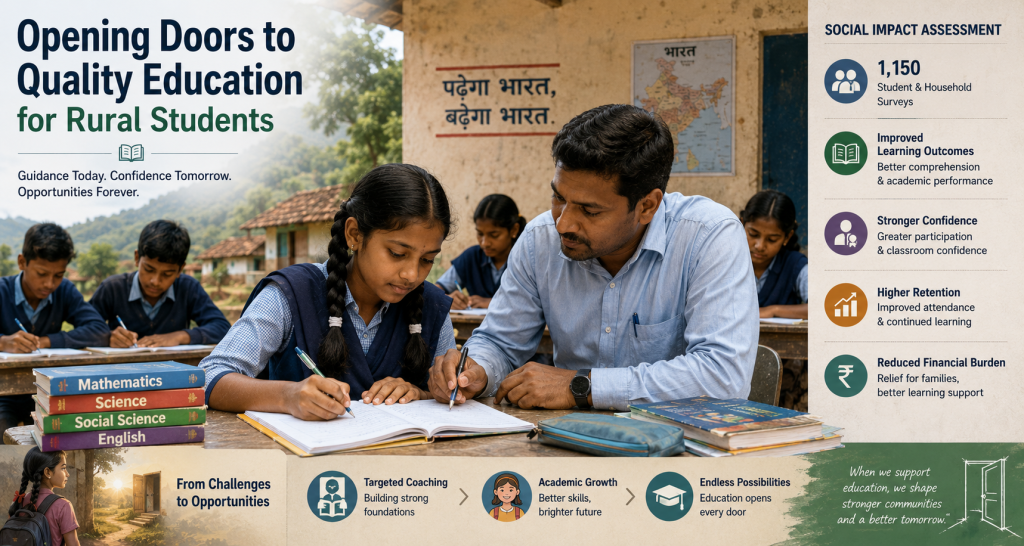
To evaluate how targeted academic support bridges this gap, a Social Impact Assessment (SIA) was launched for the Pre-Matric Coaching Programme across 13 districts in Jharkhand and Odisha. Moving beyond simple enrollment numbers, the study measures real changes in student comprehension, exam readiness, and classroom confidence.
Using the OECD-DAC framework, the research team is conducting a rigorous evaluation that includes 1,150 student and household surveys, qualitative consultations, and counterfactual analysis. These interactions capture how daily coaching sessions build foundational skills, boost retention rates, and relieve financial pressure on parents who cannot afford private tutoring.
Conducted by GRAAM with support from the Tata Steel Foundation, this assessment examines academic performance alongside cost-benefit factors. The resulting evidence base will deliver actionable recommendations to refine teaching techniques, optimize resource allocation, and ensure sustainable educational support for underserved students across the region.
Join the Conversation
What supplemental learning strategies have proved most effective for students in rural schools? Share your thoughts and join the discussion below!