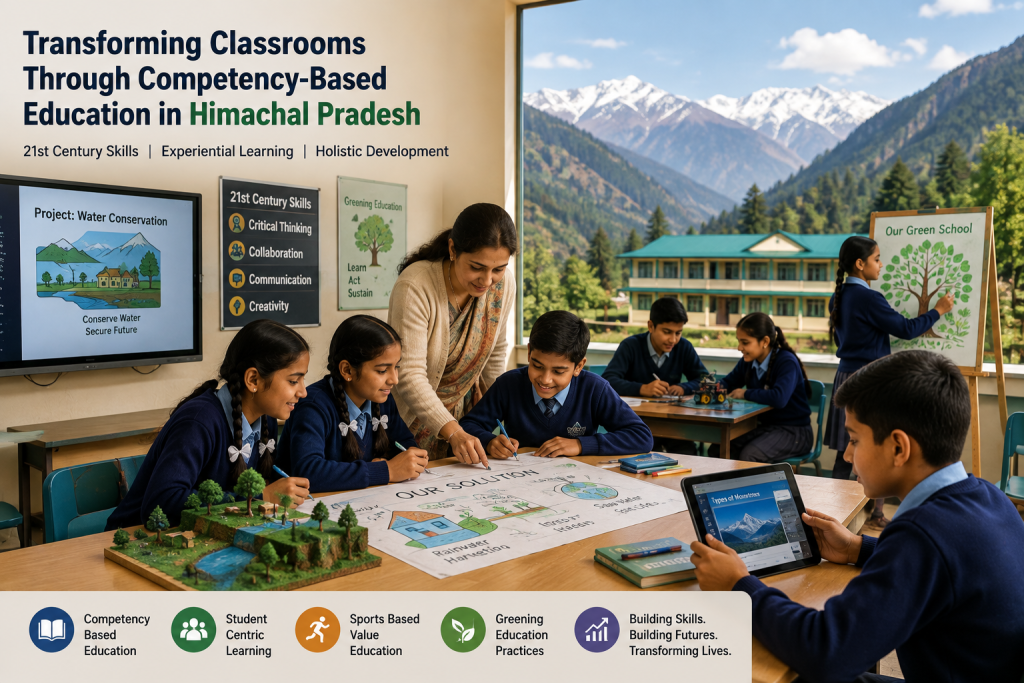
Modern education is moving beyond traditional rote learning to equip students with critical thinking, digital literacy, and practical life skills. Across Himachal Pradesh, public schools are adopting innovative teaching methodologies through HP FUTURES – Foundation for Upskilling, Teacher Excellence, Understanding, Readiness, Equity, and Sustainability, an initiative supported by UNESCO to strengthen PM Shri schools.
To understand how these progressive models translate into daily classroom experiences, an independent process evaluation is underway across the state, using a mixed-methods research design. The study focuses on evaluating the real-world delivery and fidelity of Competency-Based Education (CBE), 21st-century skill integration, sports-based value education, and greening education practices in government schools, alongside how effectively stakeholders across the system are engaged.
Rather than looking solely at final test scores, the research team is engaging directly with teachers, school leaders, students, education officials, and other key local stakeholders. These interactions capture how educators adapt to new pedagogical tools, where institutional support is strongest, and what enabling factors and daily challenges teachers face when introducing experiential learning in mountain communities.
Conducted by GRAAM, this evaluation provides real-time insights into institutional readiness, capacity-building needs, and early implementation outcomes. The project will culminate in actionable recommendations aimed at refining teacher training programs, improving student engagement, and building a scalable framework for the long-term sustainability of public school reform within the government education system.
Join the Conversation
What innovative teaching methods have made the biggest difference in your local schools? Share your experiences and join the discussion below!