Problem Identification
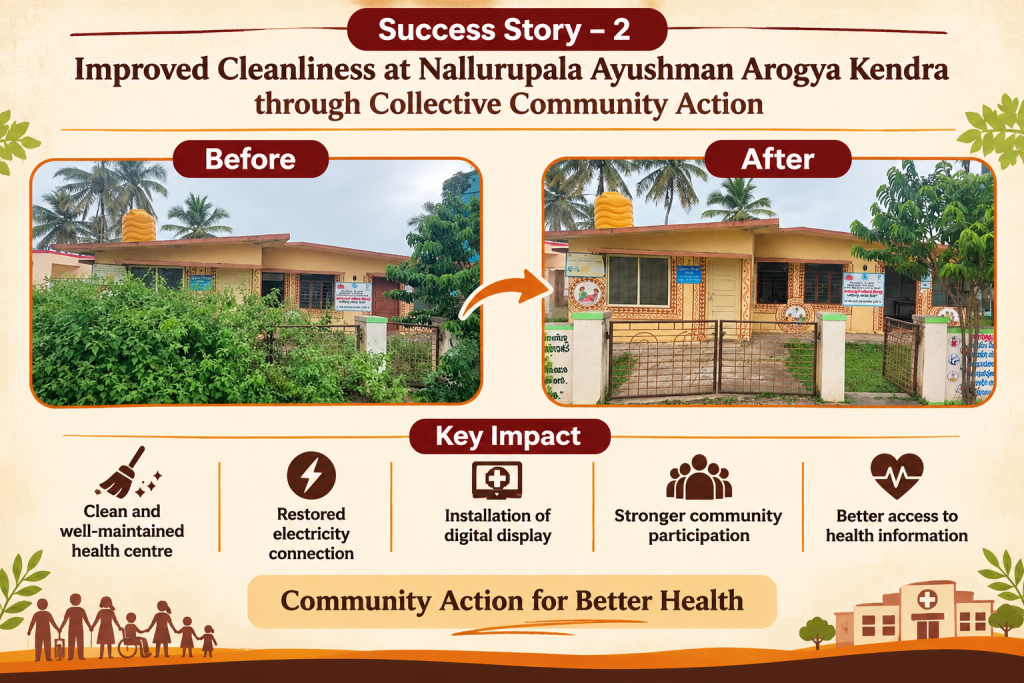
At the Nallurupala Sub-Centre–Ayushman Arogya Mandir, the posts of Community Health Officer (CHO) and Primary Health Safety Officer (PHCO) had been vacant for more than a year, affecting the centre’s upkeep. Vegetation had overgrown the premises, the building’s windows were damaged, and the interior was poorly maintained. The electricity connection had also been disconnected because an earlier bill remained unpaid, preventing the installation of the digital display provided under the project.
Measures Taken
Swasthya Swaraj project staff identified the problems and brought them to a Village Health, Sanitation and Nutrition Committee (VHSNC) meeting. Village leaders, ASHA workers, members of the Ambedkar Youth Association and VHSNC members then worked together to clean the health centre’s premises and interior.
To restore electricity, committee members contacted the relevant officials and coordinated with them. Their collective effort led to action being taken within a day to restore the connection. This avoided the need to move the digital display to another centre.
Key Results
- The health centre’s premises and interior were cleaned, creating a better environment.
- Collective community efforts led to action to restore the electricity connection.
- This made it possible to install the project-provided digital display at the same centre.
- Community participation and coordination with local authorities were strengthened in efforts to improve the centre’s upkeep and infrastructure.
- The improvements supported the infrastructure needed to share health awareness messages and information on government health programmes with the public.
The Message of a Success Story
“Community participation and collective effort can improve public health facilities.”
The experience at Nallurupala Sub-Centre shows that VHSNC meetings can provide an effective forum for identifying local issues and addressing them through coordination between the community and relevant officials. However, filling vacant staff positions and ensuring regular monitoring remain essential to the continuity of health services.