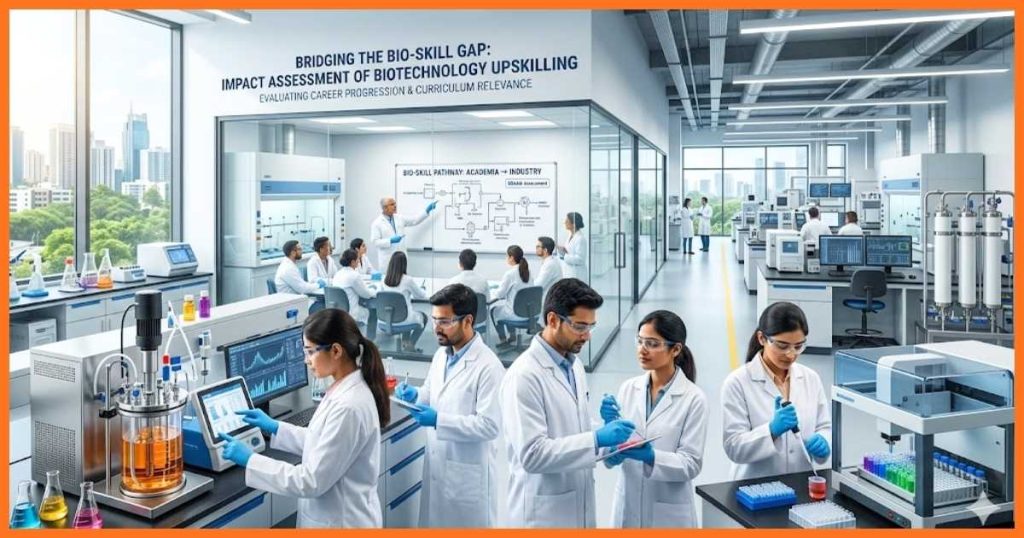
As India’s biotechnology and biopharmaceutical sectors continue to expand, the need for industry-ready talent has become increasingly important. To understand how specialized industry-linked training contributes to employability and career advancement, GRAAM conducted a comprehensive impact assessment of Biocon Academy’s Advanced Learning and Upskilling Certificate Programs.
Using a robust mixed-methods evaluation framework, GRAAM combined quantitative surveys of 321 alumni with in-depth interviews involving educational partners, industry stakeholders, placement partners, and alumni case studies. The assessment examined career progression, employability outcomes, industry relevance, learning experiences, placement effectiveness, and the impact of subsidized fee support in improving access to advanced biotechnology education.
To ensure efficient data collection and quality assurance, the study employed digitized web-based survey tools, enabling systematic outreach and tracking across multiple program batches and stakeholder groups. The assessment covered five certificate programs delivered in partnership with leading academic and industry institutions, providing a holistic understanding of program effectiveness and long-term impact.
The preliminary findings reveal strong employment outcomes. The study also highlighted the critical role of practical laboratory exposure, industry visits, mentorship, and placement support in enhancing employability and professional growth.
The final report provides evidence-based recommendations to strengthen curriculum responsiveness, integrate emerging technologies such as AI and automation, enhance alumni engagement, and further expand opportunities for women and economically disadvantaged learners. By identifying both successful delivery models and areas for improvement, GRAAM’s assessment offers a roadmap for strengthening workforce development initiatives in India’s life sciences ecosystem.
Key Takeaway / Impact
The assessment successfully evaluated Biocon Academy’s advanced learning and upskilling programs through a rigorous mixed-method approach, generating evidence on employability, industry readiness, career progression, and the impact of subsidized access. The findings provide actionable recommendations to strengthen curriculum design, industry alignment, and placement frameworks while supporting the development of a future-ready biotechnology workforce.
Join the Conversation
In highly specialized sectors such as biotechnology and biopharmaceuticals, how important is industry-integrated training in complementing traditional academic education and improving employability? Share your thoughts in the comments below.