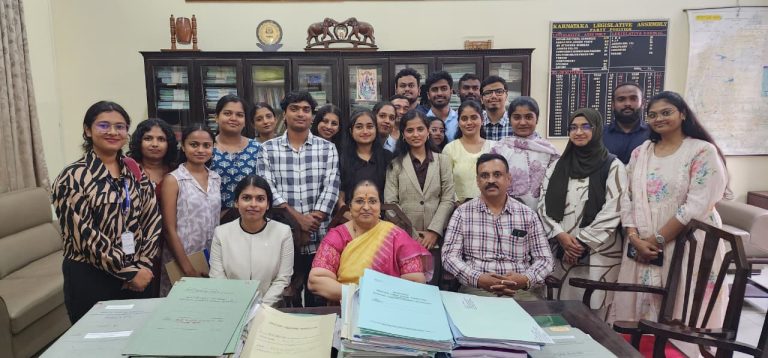
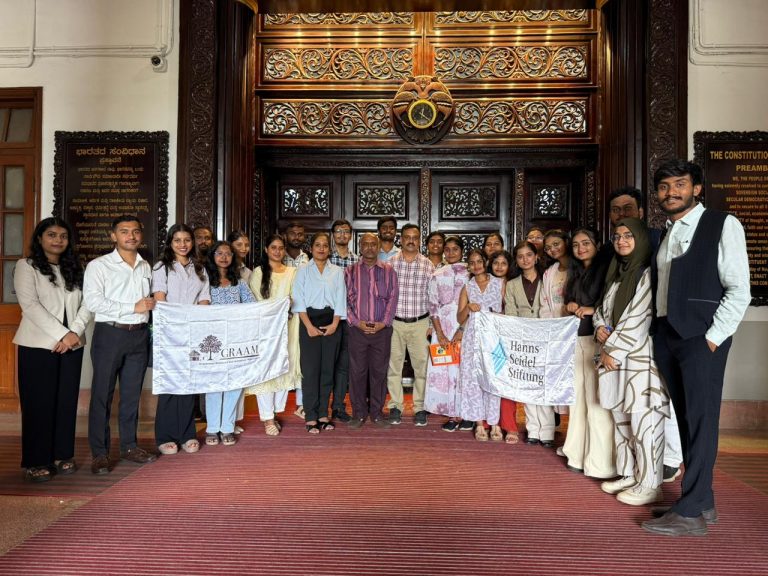
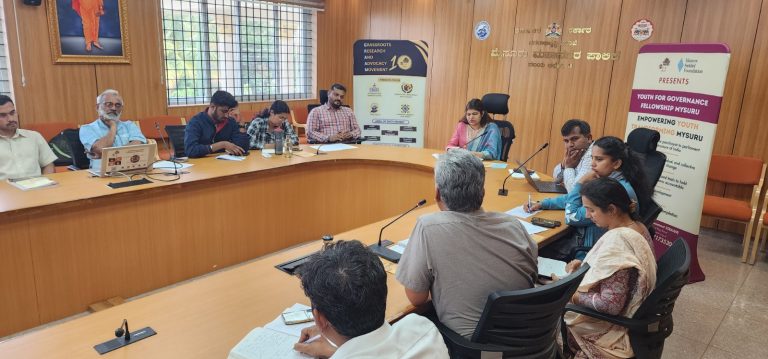
What does governance actually look like on the ground? For the cohort of the Youth for Governance Fellowship 2026, the answers came alive during a comprehensive dual expedition covering both rural and urban administration frameworks in Karnataka. Moving beyond textbooks, these young leaders stepped into the heart of public service delivery to see how community systems function.
The rural leg of the journey took the fellows to Chinakurali Gram Panchayat in Mandya district. Local panchayat officials provided a thorough overview of grassroots administration, which was followed by visits to the local Community Health Centre and Karnataka Public School. By interacting with doctors and education administrators, the fellows observed how public health programs and community-driven school committees operate under resource-conscious settings. The rural segment concluded with household visits, allowing fellows to map the real-world impact of these institutions directly through citizen feedback.
Shifting focus to urban complexities, the initiative took the fellows to Mysuru. The cohort studied urban infrastructure firsthand at the Kesare Dry Waste Processing Unit and the Kesare Wastewater Treatment Plant, learning about resource recovery, segregation, and environmental sustainability. The urban exploration concluded at the Mysuru City Corporation Zone-3 Office. Here, municipal engineers and experts from the Hasiru Dala Foundation shared valuable insights into solid waste management, sanitation, and the power of civic collaboration.
Key Takeaway
Bridging Theory and Reality: This immersive expedition equipped youth fellows with a holistic, human-centric understanding of governance, highlighting how effective public services whether rural healthcare or urban waste management rely on strong local administration and active community participation.
Join the Conversation
How can we better bridge the gap between youth leaders and local administration? Share your thoughts in the comments below!