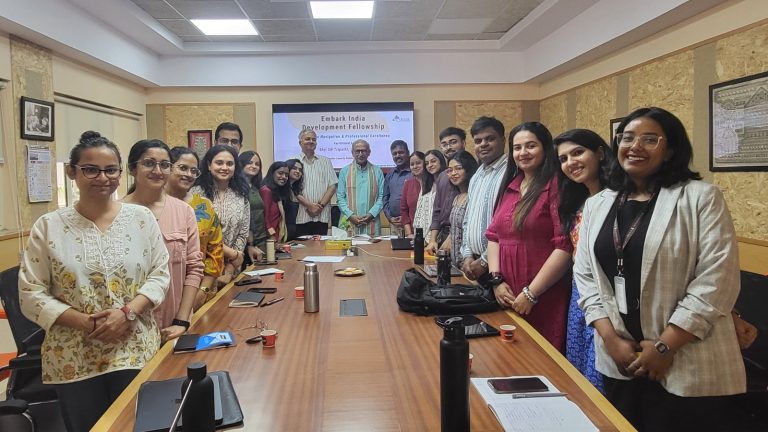
–Riya Mohan, Embark India Development Fellow
Co-Author: Dr Rajan Rawat (Consultant Grade – I) | ADP/ABP, NITI Aayog
Mentors:
- Dr Mahendra Kumar, IAS (Deputy Secretary and Additional Mission Director) | ADP / ABP, NITI Aayog
- Dr. Basavaraju R Shreshta (Executive Director) | GRAAM
- Dr Sanjeev D Kenchaigol (Research Fellow) | GRAAM
- Professor Ganesh Prasad (Consultant) | Abdul Nazir Sab State Institute of Rural Development and Panchayat Raj
Introduction
At Sankalp Saptaah[1], Prime Minister Shri Narendra Modi offered a powerful analogy: “In a family, if one member is unwell, the attention, focus, and resources of the entire family tend to revolve around that individual… Only when the family is completely healthy can the family make progress… Similarly, the development of districts, villages, and regions collectively contributes to the progress of the entire nation … transformative change come when the core issues are addressed, and development reaches the grassroots … I have chosen the path of strengthening at the grassroots, and through [this], our pyramid will rise.” (Press Information Bureau, 2023)
The ‘Aspirational’ Approach to Development
This vision lies at the heart of the Aspirational Districts Programme (ADP), launched in January 2018. Anchored in NITI Aayog and encapsulated in the motto: Sabka Sath, Sabka Vikas (Development for All), ADP is a transformative attempt to ensure that no district is left behind. A large part of the PM’s speech emphasised that these districts would rather be called ‘aspirational districts’ as people being the main focus and agent of development must not get discouraged by being labelled as belonging to ‘backward districts’[2] (NITI Aayog, 2023, p. 5). ADP aims to accelerate development in 112 under-developed districts and follows the strategy of the 3 Cs – Convergence of Central and State schemes, Collaboration among Centre, States, District Administrations, development partners and citizens, and Competition through quarterly rankings. Building on the success of the ADP, Aspirational Blocks Programme (ABP) was launched in January 2023 to address intra-district disparities by focusing on 513 under-developed blocks.
Health as a Key Area of Focus
Under ADP / ABP, the area of ‘health and nutrition’ has emerged as a major priority, carrying an overall weightage of 30 per cent. At the same time, the rising morbidity and mortality caused by non-communicable diseases (55% of Disability Adjusted Life Years Lost)[3] has further reinforced the importance of health interventions and shifted public health priorities towards the prevention and management of NCDs.
Why Brain Health Is Now a Public Health Priority
Within this broader NCD burden, neurological disorders have emerged as a major public health concern. Globally, neurological disorders are now the leading cause of disability (WHO, 2023)[4] and the second leading cause of death (Feigin et al., 2020).[5] Research evidence from India highlights the scale of the challenge, with non-communicable brain disorders accounting for 82.8 per cent of the total burden (Singh et al., 2021).[6] These include some major conditions including stroke, epilepsy, Parkinson’s disease, dementia, and headache disorders. In 2019, nearly 1.29 million people suffered from stroke, 10.1 million from epilepsy, 0.7 million from Parkinson’s disease, 3.69 million from dementia, and 488 million from headache disorders (Ibid, 2021).
India is also facing a substantial mental health burden with 15% of India’s adult population experiencing mental health issues (Gururaj et al., 2016).[7] Regionally, prevalence of mental health disorders is significantly higher in urban areas (13.5%) compared to rural areas (6.9%).[8]
Together, these numbers represent far more than epidemiological trends. They represent reduced productivity, disrupted livelihoods, and loss of over 900,000 lives (Ibid, 2021) – nearly a million families affected by neurological conditions that could be prevented, diagnosed early, and managed with timely care and treatment.
Beyond a human cost, there is also an economic cost, with mental health burden alone estimated to result in a total loss of nearly $1.03 trillion to the Indian economy from 2012 to 2030 (WHO, n.d.). [9]
Addressing these challenges is an immediate priority as they are likely to intensify in the coming years due to the demographic transitions in the country. Data suggests that India’s population is ageing. By 2031, the share of individuals 60 years and above (‘the elderly) will rise from 7.4 percent in 2001 to 13.2 percent – an increase of nearly 78 percent over three decades (MOSPI, 2021, p. 16).[10] With this, the burden of age-related brain conditions, such as Parkinson’s Disease, Alzheimer’s and other dementia disorders is also likely to increase. At the same time, modifiable risk factors associated with neurological disorders including hypertension, obesity, high body-mass index, diabetes, sedentary lifestyle, alcohol and tobacco use are also on the rise. India is already home to 89.8 million adults living with diabetes, a number which is projected to rise by 74.5% by 2050 (International Diabetes Federation, 2025).[11] In addition, nearly 267 million adults use tobacco (WHO, n.d.)[12] while alcohol consumption remains widespread. Rising rates of hypertension have also been observed in the country (IIPS & MoHFW, 2021).[13]
The Current Policy Landscape
Recognising these emerging challenges, the Government of India has launched several important initiatives, including the National Mental Health Programme (NMHP),[14] the National Programme for Non-Communicable Diseases (NP-NCD),[15] the Mental, Neurological and Substance Use (MNS) package under Ayushman Aarogya Mandirs,[16] and the National Programme for Health Care of the Elderly (NPHCE).[17]
India’s Brain Health Emerging Ecosystem
While these programmes address different dimensions of health, the concept of ‘brain health’ has recently gained attention as a critical area of focus, encompassing preventive, promotive, curative, and rehabilitative approaches to ensure ‘Brain Health’ for all. Recognising that brain health challenges require coordinated efforts, NITI Aayog constituted the “National Task Force on Brain Health”.[18] This task force comprises technical experts in neurological care and science, alongside concerned ministries, to thoroughly review existing gaps and make informed recommendations.
Building on these efforts, the Brain Health Initiative (BHI) was launched under the Aspirational Districts Programme and the Aspirational Blocks Programme on 3rd September 2025 (NITI Aayog, 2025)[19] to strengthen brain health service delivery. Currently, it is being piloted across 12 Districts of 10 states, comprising Chhattisgarh, Bihar, Uttar Pradesh, Haryana, Maharashtra, Nagaland, Kerala, Jharkhand, Tripura, and Rajasthan. These early adopters are becoming India’s first districts to recognise neurological health as a local priority.
At the heart of this initiative is a strong governance architecture with NITI Aayog as the apex policy institution, providing strategic leadership, coordination, and monitoring oversight. The Institute of Human Behaviour & Allied Sciences (IHBAS) serves as the technical partner, supporting districts with training and facilitating access to resources, equipment, and medicines. At the district level, District Magistrates/Deputy Commissioners act as the implementing authorities, ensuring administrative convergence and smooth execution on the ground.
Further, strong emphasis has been laid on strengthening systemic enablers to support effective service delivery. Infrastructure development has been a key priority, with district hospitals being supported to establish Brain Health Clinics that provide a dedicated space for delivering brain health related services. Strengthening manpower has been another critical focus. Recognising the specialised nature of neurological care, districts are being supported in recruiting or deploying personnel such as neurologists or neurosurgeons, MBBS doctors, physiotherapists, clinical psychologists, speech therapists, nurses, and district coordinators. In parallel, capacity-building efforts led by IHBAS in collaboration with district authorities have prioritised the training of existing health personnel. Foundational virtual training programmes for medical staff have already been conducted across many participating districts, while refresher training is underway to deepen clinical confidence. Availability of equipment and emergency medicines is another important enabler, whose procurement is being guided by IHBAS.
In terms of service delivery, it is designed as a continuum rather than a one-time intervention. At the primary healthcare level, awareness raising and screening of individuals for major brain-related disorders are enabling early identification before the condition progresses. Those requiring further care are referred for diagnostic evaluation at district brain health clinics where they provide assessment, treatment, and management support. For patients requiring rehabilitation support, including physiotherapy, speech therapy, and psychological counselling, referrals to specific departments ensure multidisciplinary care. Further, follow-up care has been embedded to reduce treatment drop-offs and ensure long-term patient support. To ensure people can access mental health support and clinical advice regardless of their geographic location, BHI is working on leveraging technology-based platforms as well. eSanjeevani, the national telemedicine service launched by the Ministry of Health and Family Welfare, is enabling patient-to-doctor and doctor-to-doctor consultations, while Tele Mental Health Assistance and Networking Across States (Tele-MANAS) is expanding the reach of mental health services, particularly among hard-to-reach populations.
Because no health system can succeed if communities do not seek care, the initiative also places strong emphasis on Information, Education and Communication (IEC) and Behaviour Change Communication (BCC) activities. Across districts, existing health infrastructure is being utilised to raise awareness and reduce stigma. Public display of messaging inside the brain health clinics are further increasing the visibility of the initiative.
Despite its early implementation, BHI is making three strategic shifts in the way brain health services are understood and delivered in India. First, from sickness to prevention: shifting the focus from late-stage diagnosis and treatment to early risk identification, prevention, and health promotion. Second, from hospitals to community: reducing the burden on tertiary facilities and providing services closer to where people live, through strengthening of primary and secondary level of care. Third, from stigma to empowerment: reframing the narrative around brain conditions from one of fear and stigma to one centred on agency and positive brain health messaging.
The Road Ahead for India’s Brain Health Agenda
Recent consultations with frontline health workers, district and block-level officials, medical professionals, and administrative functionaries however suggest opportunities for further strengthening of the initiative.
Going forward, alongside strengthening specialist capacity, it will be equally important to build the skills of frontline and community health workers, including Accredited Social Health Activists (ASHAs), Auxiliary Nurse Midwives (ANMs), Multipurpose Workers (MPWs), and Community Health Officers (CHOs). As the first points of contact within communities, these workers can play a critical role in raising awareness, supporting early screening, and strengthening brain health services at the primary healthcare level. Developing and disseminating simple screening tools, referral protocols, and community-level decision-support checklists can further aid them. At the same time, integrating brain health related activities into the existing workload of frontline workers must be accompanied with adequate incentives, given the wide range of responsibilities they already undertake across multiple health programmes.
Addressing stigma associated with brain-related conditions will also be central to improving care-seeking behaviour. Integrating brain health awareness and screening within existing community platforms – such as general health camps, schools, Village Health Sanitation and Nutrition Days (VHSNDs), and routine outreach activities – may prove more effective than conducting standalone brain health camps. During consultations, one ASHA worker observed that people may hesitate to attend “brain health” camps due to fear and stigma, whereas general health camps may encourage greater participation.
Further, community-led approaches offer promising lessons in stigma reduction. Initiatives such as local TB Champions have already demonstrated success in “dispelling myths and improving awareness of tuberculosis, its symptoms, and where to seek care”.[20] A similar model of local ‘Brain Health Champions’ could be implemented by districts to build community trust and strengthen engagement.
While existing digital platforms such as Tele-MANAS and eSanjeevani have shown significant potential in expanding service reach, addressing the large unmet need will require stronger operational efficiency. This includes expanding the availability of specialist medical personnel, reducing consultation wait times, improving responsiveness, and addressing any technical or connectivity challenges to ensure timely, accessible, and high-quality care.
However, the role of technology must extend beyond digital access to harnessing the potential of Artificial Intelligence (AI). AI-enabled tools can empower communities with information on brain health, early warning signs, preventive behaviours, and available services, while also strengthening last-mile service delivery. Platforms such as RapidPro and WhatsApp-based multilingual chatbots can reduce frontline workers’ reliance on paper-based screening by enabling digital symptom entry and preliminary screening to support timely referrals and decision-making. Evidence from India[21] has already demonstrated the potential for using AI in health. For e.g., ASHABot, a Generative AI model connected to a broad knowledge base containing India’s public health manuals, immunisation guidelines, and family planning protocols, is helping ASHA workers to serve patients in rural India.
At the systems level, convergence with existing Government of India programmes presents a significant opportunity. Programmes such as the NMHP, the NP-NCD, and the NPHCE provide important entry points for early screening, referral, and continuity of care for individuals with brain disorders. Effective convergence will require a well-coordinated ecosystem of institutional linkages, standardised protocols, cross-programme communication, referral pathways, and sustained capacity-building across the continuum of care.
Lastly, strengthening monitoring under the initiative will also be critical to assess whether brain health services are effectively reaching people and improving outcomes. This would require tracking screening coverage, diagnosis rates across different brain disorders, treatment initiation, counselling uptake, and patient retention, while also identifying barriers to care-seeking and treatment adherence. Monitoring could further assess whether awareness and stigma-reduction efforts are improving early care-seeking behaviour, and whether capacity-building initiatives are adequately preparing medical professionals and frontline workers to deliver quality services. Such evidence will not only support timely course correction, but also inform the National Brain Health Blueprint, a nationwide strategy[22] being developed by NITI Aayog under the guidance of the National Task Force on Strengthening Brain Health Care and Services in India to prevent and manage cognitive disorders before they become irreversible. The blueprint will also draw insights from successful models like the Karnataka Brain Health Initiative (KaBHI) and represents a significant step towards addressing the growing burden of neurological disorders in India, aiming to establish effective prevention strategies and healthcare interventions to improve brain health outcomes nationwide.[23]
In India’s quest to become Viksit Bharat by 2047, investing in comprehensive brain health is crucial to unlocking India’s human capital. Healthy minds drive creativity and innovation – qualities that move our people and our economy forward. By bringing brain health care to the ‘grassroots’, India is not only treating disease – it is investing in the cognitive capital and preparing our institutions for the future.
About the Author
Riya Mohan is a Fellow with the Embark India Development Fellowship, placed at NITI Aayog, Government of India. Her current area of work focuses on strengthening the Brain Health Initiative under the Aspirational Districts Programme and the Aspirational Blocks Programme.
Citations:
[1]Press Information Bureau. (2023, September 30). English rendering of PM’s address at ‘Sankalp Saptaah’ programme on aspirational districts. Prime Minister’s Office, Government of India. Press Information Bureau
[2]NITI Aayog. (2023). Aspirational districts: Unlocking potentials. Government of India. Report
[3]Ramesh, S., & Kosalram, K. (2023). The burden of non-communicable diseases: A scoping review focus on the context of India. Journal of Education and Health Promotion, 12, 41. Article
[4]World Health Organisation. (2023, July 20). New global action plan on epilepsy and other neurological disorders published.
[5]Feigin, V. L., Vos, T., Nichols, E., et al. (2020). The global burden of neurological disorders: Translating evidence into policy. The Lancet Neurology, 19(3), 255–265. Article
[6]Singh, G., Sharma, M., Kumar, G., et al. (2021). The burden of neurological disorders across the states of India: The Global Burden of Disease Study 1990–2019. The Lancet Global Health, 9, e1129–e1144. Article
[7]Gururaj, G., Varghese, M., Benegal, V., Rao, G. N., Pathak, K., Singh, L. K., et al. (2016). National Mental Health Survey of India, 2015–16: Prevalence, patterns and outcomes. National Institute of Mental Health and Neurosciences. Report
[8]Press Information Bureau. (2025, November 9). Understanding mental health. Government of India. Press Release
[9]World Health Organisation. (n.d.). Mental health. WHO India. Statistics
[10]Ministry of Statistics and Programme Implementation. (2021). Elderly in India 2021. Government of India, National Statistical Office, Social Statistics Division. Report
[11]International Diabetes Federation. (2025). India diabetes statistics & health data. IDF Diabetes Atlas. Statistics
[12]World Health Organisation. (n.d.). Tobacco. WHO India. Statistics
[13]International Institute for Population Sciences, & Ministry of Health and Family Welfare. (2021). National Family Health Survey (NFHS-5), 2019–21. NFHS-5
[14]Press Information Bureau. (2026, April 1). Government implements National Mental Health Programme to strengthen mental health services. Government of India. Press Release
[15]Press Information Bureau. (2026, March 13). Measures taken to prevent non-communicable diseases. Government of India. Press Release
[16]Press Information Bureau. (2026, April 28). Steps taken to strengthen and integrate mental healthcare services. Government of India. Press Release
[17]Press Information Bureau. (2016, May 6). National programme for health care of elderly. Government of India, Ministry of Health and Family Welfare. Press Release
[18]NITI Aayog. (2026). Annual report 2025–26. Government of India. Report
[19]NITI Aayog. (2025, September 3). Launch of ADP/ABP Brain Health Initiative [Post]. X
[20]Krishnan, N., & Srinivasan, A. (2026, March 24). A decade of building India’s TB champion movement. The Hindu. News Article
[21]Microsoft Research. (2025, June 24). How ASHABot empowers rural India’s frontline health workers. Story
[22]Thacker, T., & Sharma, Y. S. (2025, June 2). Niti brainstorms to prepare a national brain health blueprint. The Economic Times. Article
[23]Medgate Today. (2025, June 2). NITI Aayog initiates development of National Brain Health Blueprint to combat rising neurological disorders. News Article