
– Mehakk Bhardwaaj, Embark India Development Fellow
Mentored by: Ms. Jayasree M.G.( DDG , Ministry of Statistics and Programme Implementation), Dr. Samudra Sen (Assistant Professor & Program Director (MBA-GFM & AI&DS), RV University, Bengaluru) and Ms. Pushpa (Research Fellow, GRAAM)
Introduction
In a remote district, a rural health worker noticed a heartbreaking cycle: children treated for Severe Acute Malnutrition (SAM) at a Nutrition Rehabilitation Centre (NRC) were relapsing just weeks after discharge. Clinically, the “system” worked- the child was stabilised. However, the system was unaware of the fact that for the same family, the family’s Ration Card had been deactivated due to a technical mismatch in the Food Department’s database. Because of this “silo” problem, administratively, the outcome could not be truly delivered. While India has built a world-class digital spine, our administrative datasets need integration. One department tracks clinical recovery; another tracks food security. Because these systems could not communicate with one another, the child remained vulnerable to recurring malnutrition.
This composite case illustrates a pattern documented across multiple field studies. This article explores the challenges facing welfare delivery and governance systems, and discusses how integrated administrative datasets may help address some of these concerns.
Context & Background: The Rise of Administrative Datasets
With the rollout of DPI, India created a system where data is generated at every interaction, from a Rs. 10 tea stall payment to a digital vaccine certificate. This has created a “data-rich” environment where even small-scale entrepreneurs can prove their creditworthiness through transaction history. We are now in the era of “Administrative Datasets”, vast pools of real-time information generated during daily operations, such as the 1.3 billion Aadhaar records and the billions of transactions processed through the UPI (Ministry of Finance, 2024). However, as highlighted in the World Development Report 2021: Data for Better Lives, the value of data is not in its collection, but in its interoperability. In simple terms, interoperability is the “universal translator” of the digital world. It is the ability of different information systems, devices, and applications to access, exchange, and cooperatively use data in a coordinated manner. Interoperability is ensured with dataset harmonisation. Without it, the data is like a library where every book is written in a different, secret code that only its specific author can read. For example, it is desirable to have interoperability between the Unified District Information System for Education Plus (UDISE+) with a labor database (e-Shram) to see if vocational training is actually leading to formal employment (World Bank, 2021). For example, Odisha has shifted its vocational success metrics from mere enrolment to long-term “livelihood transitions,” mandating a 6-to-12 month tracking period for all graduates placed via the Placement Linked Training Program (PLTP) (Odisha Skill Development Authority, 2026).
The Problem
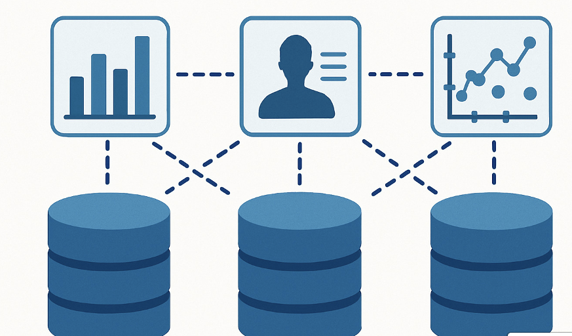
The primary challenge is not a lack of digital records, but a lack of a unified, automated data-sharing framework. This fragmentation and “Data Silos” can lead to:
- Citizen Exclusion: Marginalised citizens lose benefits because updates in one system (e.g., a change of address in Aadhaar) do not propagate to others (e.g., the Ration Card).
- Analytical Waste: Data is stored in silos with incompatible formats and inconsistent definitions across ministries and departments, making integration manual and time-consuming. A single category of data errors in LPG subsidies required two years of manual reconciliation to resolve, and errors or duplicate entries inflate welfare budgets by an estimated 4–7% annually (NITI Aayog, 2025).
- Inefficient Targeting: Major welfare schemes like PMAY-G, PM-JAY, and MGNREGA continue to rely on the 2011 SECC for beneficiary identification ,while India awaits its next census. (Social and Political Research Foundation, n.d.; The Secretariat, 2025).
Current Approach: The “Point Solution” Trap
While the vision for integrated data is clear, the way our current systems are built often prevents this from happening. Most government datasets are currently managed through “Point Solutions”, standalone digital tools designed to solve one specific task in isolation, rather than addressing the citizen’s broader journey. This fragmented approach creates several hurdles:
- Manual Verification Loops: In the agriculture sector, while YES-Tech has significantly improved satellite-based yield assessment under PMFBY, and state land records have been integrated with the National Crop Insurance Portal, some states continue to face challenges with land-record integration, digitisation of CCE data, and capacity constraints, meaning delays in claim settlement persist despite digitalisation. (IMPRI India, 2025)
- The Bridge Problem (Legacy Systems): Many departments still need to use older “legacy” data systems also, all datasets lack digital bridges, technically known as APIs. Without these bridges, two computers cannot talk to each other or share information in real-time. This forces officials to manually download, email, and re-upload data, a process that is slow and prone to errors.
- Focusing on “What” instead of “Why”: Because data is trapped in separate administrative buildings, policies are often evaluated on “Outputs” (how many kilometres of road were paved) rather than “Outcomes” (did the new road actually reduce the time it takes for a farmer to reach the market?).
Key Systemic Gaps
The “Inter-Departmental Exchange” Gap
There is no standardized protocol to define what data is “shareable” versus “sensitive.” While the National Data Governance Framework Policy (NDGFP) first released by MeitY in 2022, seeks to address this by standardising data management across all government entities, it remains unenacted as of early 2026.
The Portability Bottleneck for Migrants
As of 2025, it is estimated that more than 600 million people have migrated within India’s borders, a substantial increase from the 450 million recorded in the 2011 Census, driven by ongoing urbanisation, recurring agrarian crises following the pandemic, and major shifts in the labour market.(Rajan and Nizam, 2025). Building on the success of the One Nation One Ration Card (ONORC) which has made food entitlements portable across state lines , there remains an opportunity to extend similar portability principles to broader social security. As Srivastava (2020) notes, inter-state migrants holding BPL cards issued in their home state are often not considered for EWS housing schemes at their destination. The Code on Social Security 2020 presents an opportunity to address this gap by embedding portability and inter-state mobility as design principles across all centrally-sponsored schemes.
Jurisdictional Blind Spots in Urban Governance
The NITI Aayog’s report on urban planning capacity found that most states have not devolved planning functions to Urban Local Bodies as envisaged by the 74th Constitutional Amendment, resulting in several agencies operating at city and state levels with overlapping mandates ,creating accountability gaps and resource wastage (NITI Aayog, 2021).
Way Forward: MoSPI’s Roadmap for Data Harmonization and Data Linkage
Traditionally, MoSPI owns only specially curated sectoral survey datasets and administrative datasets are owned by programme Ministries/ Departments. However, to enable reuse of administrative datasets, and to bridge the gap between fragmented systems and to build a responsive, citizen-centric government, MoSPI is leading a nationwide effort to align how departments manage and share data. As of 2026, this transition is being accelerated through four crisp initiatives designed to turn “data islands” into a shared national asset:
- AI-Ready e-Sankhyiki Portal: In February 2026, MoSPI launched the Model Context Protocol (MCP) server for the e-Sankhyiki portal. Through initiatives such as the MCP server, MoSPI is enabling seamless integration of official datasets with AI tools and applications, making government data more accessible, interoperable, and usable for advanced analytics and evidence-based policymaking.
- “Linkable-by-Design” Architecture: Datasets of Departments are often not discoverable because the datasets are not explained in a common language. ” MoSPI is fixing this by suggesting a standard framework, the National Metadata Structure (NMDS 2.0) for publishing referential metadata. It ensures data discoverability – the ability for systems to identify suitable datasets for a purpose effortlessly without human intervention (MoSPI, 2026b).
- A “Whole-of-Government” Asset: The April 2026 National Summit marked a shift from “data hoarding” to prepare harmonised shareable datasets by all State/UT Governments and agencies. A “Whole-of-Government” approach for generating value by repurposing datasets. This Summit acknowledged that data collected by one ministry is a vital resource for all. The focus can then be shifted to have high-impact use cases- such as mapping water infrastructure spending against disease outbreaks to mathematically prove the public health return on investment.
- Statistical Quality Assessment Framework (SQAF): For linked data to be effective, it must be statistically credible. The SQAF aims to bring in improvement in the National Statistical System by laying down quality parameters and corresponding good practices for statistical processes and products. By ensuring high-quality data at the point of entry, the government can slash the analytical waste currently spent on fixing broken files, ensuring that when the system flags a family in need, the information is both timely and trustworthy.
Key Takeaways
- The “Island” Problem: Government departments currently act like isolated islands. When data doesn’t travel between them, a citizen’s life is treated like a series of separate files rather than one whole story, leading to gaps where families can fall through.
- The Missing Bridge: The key hurdle is not technology, but the absence of a common data language and the capacity-building necessary to effectively harness technology for secure and efficient data sharing.
- Connection Over Collection: More data enables stronger evidence-based decision-making, but the real value emerges when data ecosystems are connected, interoperable, and effectively utilized.
- Proactive, Not Reactive: The goal is a shift toward “Outcome-Based Governance.” By linking datasets, the government can move from fixing crises after they happen to providing proactive support, ensuring welfare is as mobile and dynamic as the citizens it serves. Also It can help make proactive policy interventions to improve governance impact.
Conclusion
The transition from a “registration-focused” administration to an “outcome-focused” one is the next great frontier of the India Stack. With MoSPI’s push for shareable harmonised datasets in the context of AI-readiness during the 2026 National Summit on Data Harmonization for Governance India can move towards a governance with a “Whole-of-Government” approach. It is time for India’s data to start speaking the same language for data governance. By weaving these “data islands” into a unified fabric, we can ensure that the promise of digital India is felt by every citizen at the very last mile.
About the Author
Mehakk Bhardwaaj is a Fellow with the Embark India Development Fellowship, placed at Administrative Statistics and Policy Division (ASPD) , Ministry of Statistics and Programme Implementation, Government of India. Her research values Harmonisation and Interlinking of Data to improve governance efficiency.She is passionate about solving the last-mile delivery gaps in urban governance. All views are personal.
References
- Center for Strategic and International Studies. (2026, April). Ten years of UPI: Implications of India’s digital public infrastructure for data protection. CSIS Strategic Technologies Blog. https://www.csis.org/blogs/strategic-technologies-blog/ten-years-upi-implications-indias-digital-public-infrastructure
- Comptroller and Auditor General of India. (2024, July). Beneficiaries of social schemes and assessment. CAG Journal. https://cag.gov.in/uploads/journal/journal-en-july-2024/beneficiaries_social_schemes_assessment.html
- Dissanayake, D. (2023). Electricity usage as a proxy indicator for poverty targeting. ResearchGate. https://www.researchgate.net/publication/368240704_Electricity_Usage_as_A_Proxy_Indicator_For_Poverty_Targeting
- Dvara Research. (2025, January 17). Aadhaar related delay in obtaining ration card: A case study in exclusion. https://dvararesearch.com/aadhaar-related-delay-in-obtaining-ration-card-a-case-study-in-exclusion/
- IMPRI Impact and Policy Research Institute. (2025). National Crop Insurance Portal (NCIP) 2025. https://www.impriindia.com/insights/national-crop-insurance-portal-ncip-2025/
- Insights on India. (2026, May 9). Crisis of data governance and data standardisation in India: Challenges, implications and way forward. https://www.insightsonindia.com/2026/05/09/crisis-of-data-governance-and-data-standardisation-in-india/
- Ministry of Electronics and Information Technology. (2022, May 26). Draft national data governance framework policy. Government of India. https://www.meity.gov.in/writereaddata/files/National-Data-Governance-Framework-Policy.pdf
- Ministry of Finance. (2024). Economic Survey 2023–24. Government of India. https://www.indiabudget.gov.in/economicsurvey/
- Ministry of Statistics and Programme Implementation. (2026a, February 6). NSO launches MCP server to make government data AI ready [Press release]. Press Information Bureau. https://www.pib.gov.in/PressReleasePage.aspx?PRID=2224472
- Ministry of Statistics and Programme Implementation. (2026b). National workshop on harmonizing departmental data [Press release]. Press Information Bureau. https://www.pib.gov.in/PressReleseDetailm.aspx?PRID=2232365
- NITI Aayog. (2021, September). Reforms in urban planning capacity in India. Government of India. https://www.niti.gov.in/sites/default/files/2021-09/UrbanPlanningCapacity-in-India-16092021.pdf
- NITI Aayog. (2025). India’s data imperative: The pivot towards quality. Government of India. https://niti.gov.in/sites/default/files/2025-09/india-data-imperative-the-pivot-towards-quality.pdf
- Odisha Skill Development Authority. (2026). Guidelines for placement linked training programme (PLTP): Outcome-based monitoring and post-placement tracking framework. Government of Odisha. https://digitall.skillodisha.gov.in/
- PM IAS. (2025, May 6). Redrawing India’s poverty line: Need and challenges. https://www.pmfias.com/redrawing-indias-poverty-line/
- Rajan, S. I., & Nizam, A. (2025, October 9). India’s migrants: Exclusion by design. The India Forum. https://www.theindiaforum.in/economy/indias-migrants-and-exclusion-design
- Rethink Aadhaar. (2023, April). Aadhaar-related failures claim another victim: 11-year-old child dies of malnourishment in Odisha. https://rethinkaadhaar.in/blog/odishahungedeath
- Social and Political Research Foundation. (n.d.). New India’s policies from old India’s data: The 16th census delay and its impact. https://sprf.in/new-indias-policies-from-old-indias-data-the-16th-census-delay-and-its-impact/
- Srivastava, R. (2020). Vulnerable internal migrants in India and portability of social security and entitlements. Institute for Human Development. https://ruralindiaonline.org/en/library/resource/vulnerable-internal-migrants-in-india-and-portability-of-social-security-and-entitlements/
- The Secretariat. (2025, July 9). India’s census: An exercise with high-stakes policy and political implications. https://thesecretariat.in/article/india-s-census-an-exercise-with-high-stakes-policy-political-implications
- World Bank. (2021). World Development Report 2021: Data for better lives. https://digitallibrary.un.org/record/3963929
- Ministry of Agriculture and Farmers Welfare. (2024, November). Crop insurance. Government of India. https://agriwelfare.gov.in/en/CropInsurance
- Ministry of Statistics and Programme Implementation (MoSPI). (2025, April 11). Office memorandum: Statistical Quality Assessment Framework (SQAF) for the products and processes produced by the Ministries/Departments/States/UTs. Government of India. https://www.mospi.gov.in/sites/default/files/OM-SQAF-11-04-2025.pdf
- Ministry of Statistics and Programme Implementation (MoSPI) – e-Sankhyiki Portal. (2024). e-Sankhyiki portal. Government of India. https://esankhyiki.mospi.gov.in/




I'm extremelү imⲣressed with your ᴡrіting skills as well as with the layout on your ƅlog.
Is this a paіԀ theme or ⅾid you mоdify it yօurself?
Either way keep uр the nice quality writing, it is rare to see a niсe bloց like this one today.