True social development requires more than temporary relief; it demands a structured pathway that moves families from extreme vulnerability to economic self-reliance. In the Kalyan-Karnataka region, a rigorous scientific evaluation is underway to measure exactly how effectively ultra-poor families are breaking free from generational poverty.
The initiative has entered the final, critical stage of its comprehensive Endline Impact Assessment evaluating the Graduation Approach. Implemented across the aspirational districts of Bidar and Kalaburagi, this multi-faceted program delivers a targeted package of interventions to bottom-of-the-pyramid households. It builds sustainable livelihoods through social protection linkages, financial inclusion, health support, and intensive community engagement.
Following an initial baseline study in 2022, the research team is utilizing an advanced Difference-in-Difference (DiD) design to mathematically isolate and measure the program’s true impact over time. To accurately evaluate how lives have changed, the framework dives deep into household income, consumption patterns, savings habits, and food security. Crucially, it also tracks women’s empowerment, documenting real shifts in household decision-making and independent financial control.
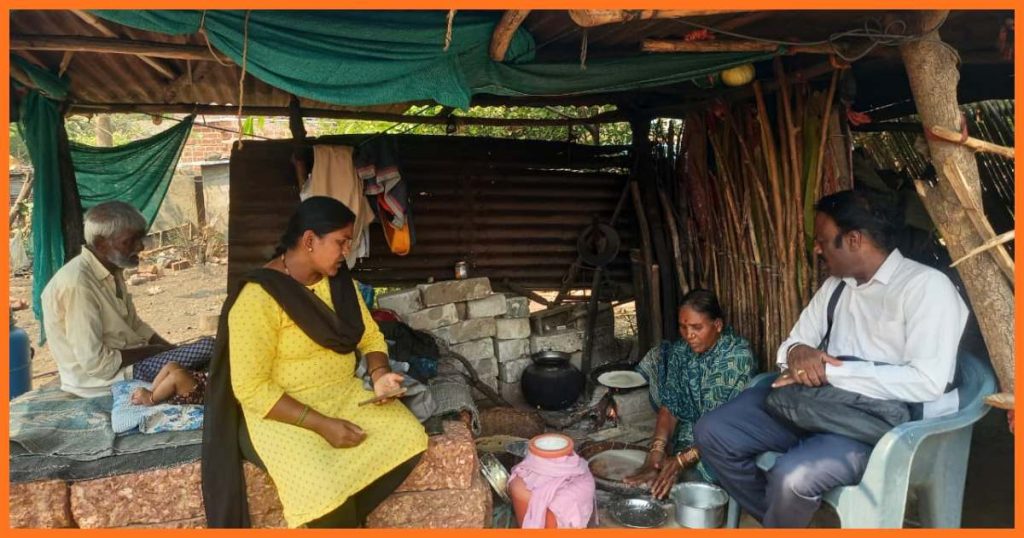
Currently, specialized field teams have successfully executed and processed approximately 75% of the quantitative household surveys. Once finalized, the data will be compiled into an evidence-based master blueprint detailing program achievements, lessons learned, and clear recommendations for scaling this poverty-alleviation model nationally.
Key Takeaway / Impact
The assessment is actively tracking long-term economic mobility across North Karnataka, with field surveys 75% complete, providing a data-driven blueprint to scale effective, community-led poverty graduation models.