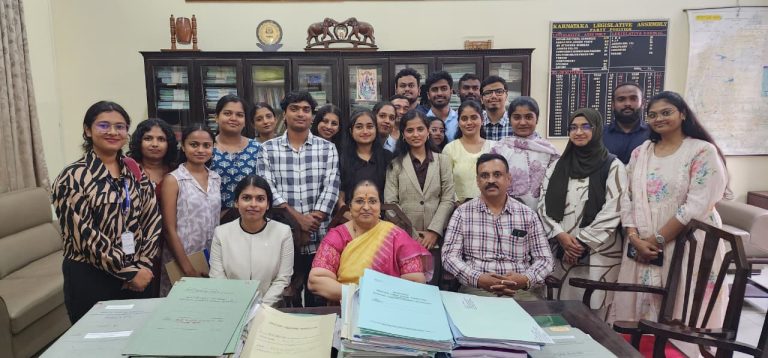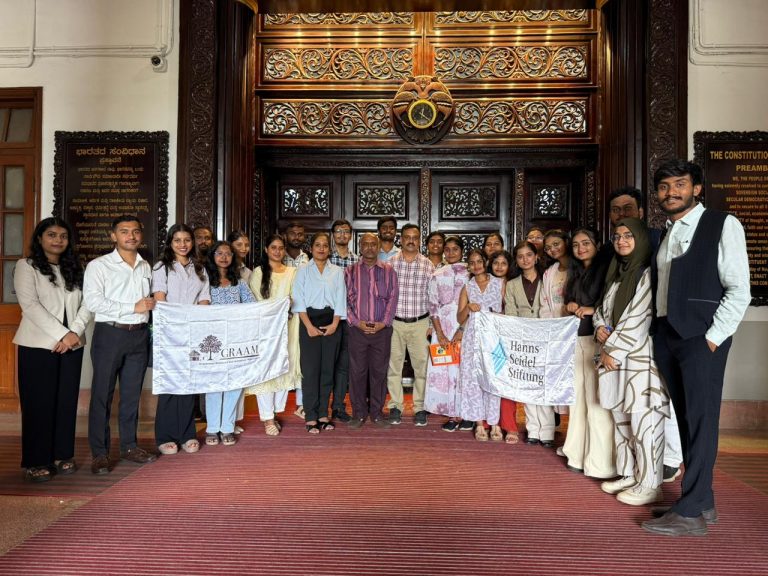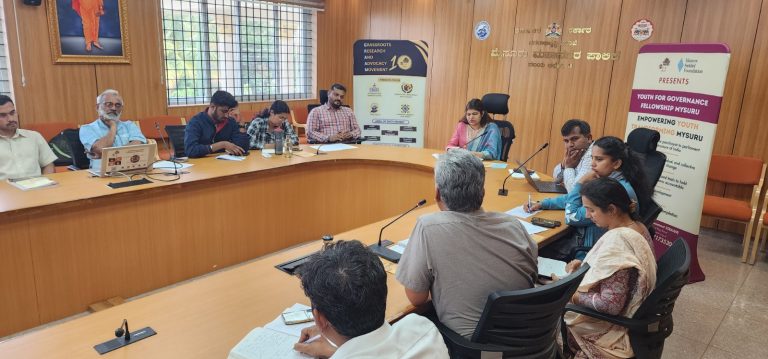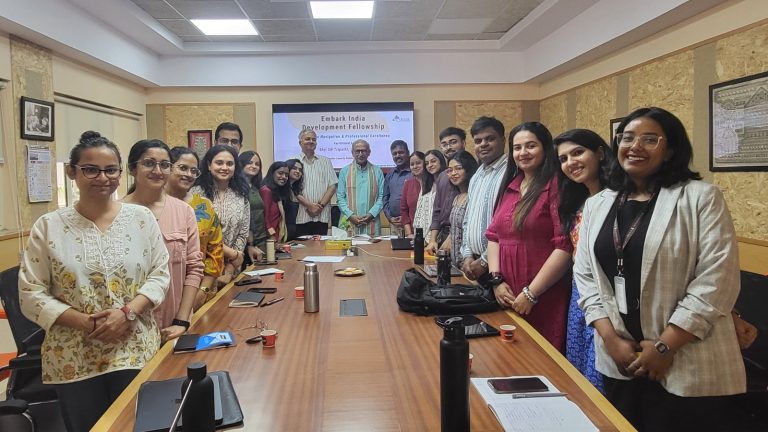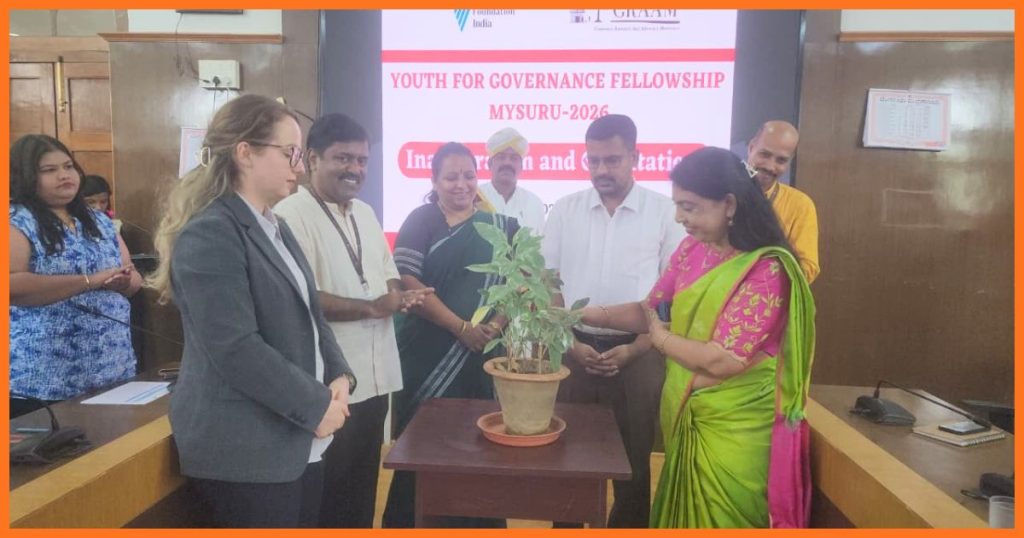
Urban development in modern India is undergoing a massive shift. As cities grow at an unprecedented pace, managing this transformation requires more than just financial investments, it demands a fundamental change in how we think about civic problem-solving. This was the central message at the formal launch of the 5th Cohort of the Youth Governance Fellowship (Y4G) in Mysuru.
Delivering the keynote address, Mr. Shaik Tanveer Asif, IAS, Commissioner of the Mysuru City Corporation (MCC), challenged the newly inducted fellows to rethink traditional urban administration. While funding for local governance has increased significantly, the real bottleneck lies in meticulous planning and execution. The solution, he noted, is integrating “Design Thinking” into public administration, a framework that prioritizes the lived experiences and actual needs of everyday citizens. The initiative, organized in partnership with the Hanns Seidel Foundation, aims to channel youth leadership into solving ground-level friction points like parking management, street vending regulations, and inclusive urban mobility.
To bridge the gap between youth and public policy, the organization provides a highly structured 13-module learning framework. Through ward transit walks and direct governance dialogues, fellows will embed themselves within municipal departments to study priority social issues. By replacing widespread assumptions with data-driven recommendations, these young changemakers will help the city administration make informed, people-centric decisions that preserve Mysuru’s unique heritage while championing accessibility and climate resilience.
Key Takeaway / Impact
The launch of the 5th Y4G cohort establishes a collaborative platform between youth fellows and the city corporation, utilizing design thinking and field data to deliver actionable, inclusive solutions for urban civic challenges.
Join the Conversation
The fellowship is proof that when young minds are given the right tools, they can co-create smarter cities. How do you think “Design Thinking” can solve civic issues in your neighborhood? Share your thoughts in the comments below!