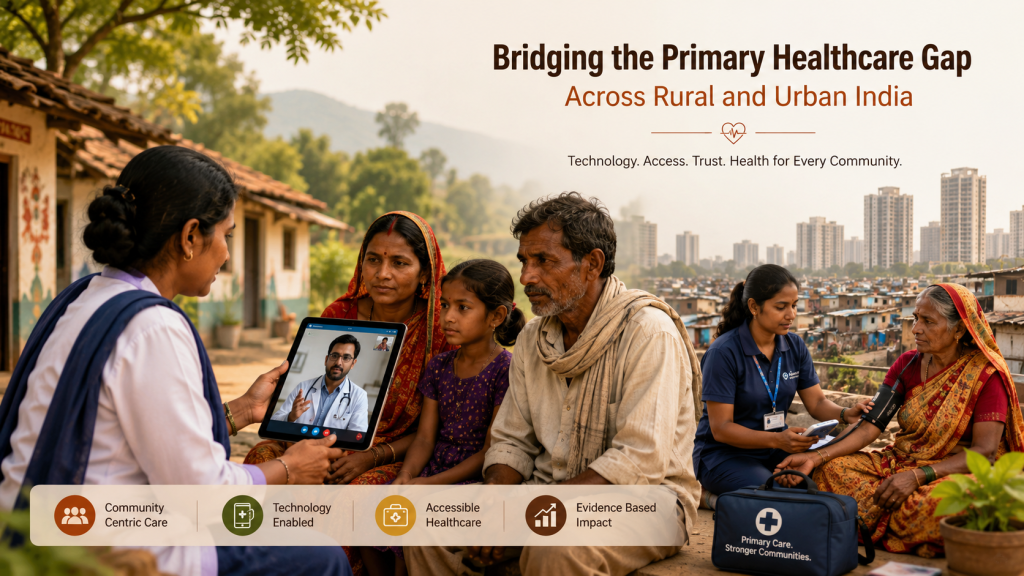
Quality healthcare often feels out of reach for families living in remote and underserved communities. Across the diverse landscapes of West Bengal, Jharkhand, Meghalaya, and Maharashtra, accessing dependable primary medical care remains an everyday challenge for thousands of households.
To understand how technology-enabled care models are changing this reality, GRAAM conducted an independent third-party impact evaluation of an integrated primary healthcare initiative. Moving beyond abstract metrics, the evaluation team engaged directly with grassroots communities through 273 household surveys, six Focus Group Discussions, and field consultations. These conversations captured the authentic experiences of mothers, senior citizens, and daily wage workers seeking reliable medical support.
The evaluation assessed how effectively the integrated model improves service accessibility, promotes early diagnosis, and eases the financial burden of routine healthcare expenses on vulnerable families. By analyzing primary data from both rural villages and dense urban settlements like Mumbai, the team documented tangible improvements in community well-being and health-seeking behavior.
The core deliverable of this initiative is a comprehensive impact evaluation report filled with evidence-based insights. The report provides an actionable roadmap for program managers and decision-makers to refine service delivery, strengthen healthcare infrastructure, and successfully scale up primary care interventions across the country.
Join the Conversation
How can integrated primary healthcare models better serve remote communities in your region? Share your insights and join the discussion below!