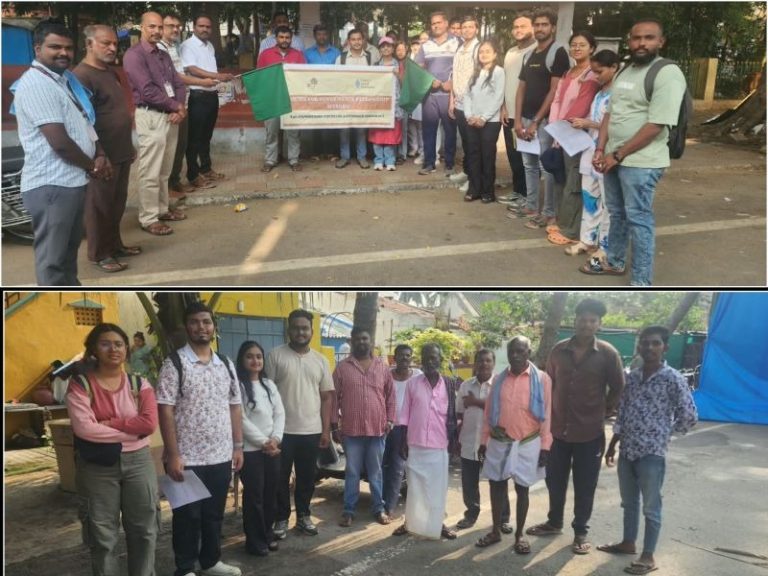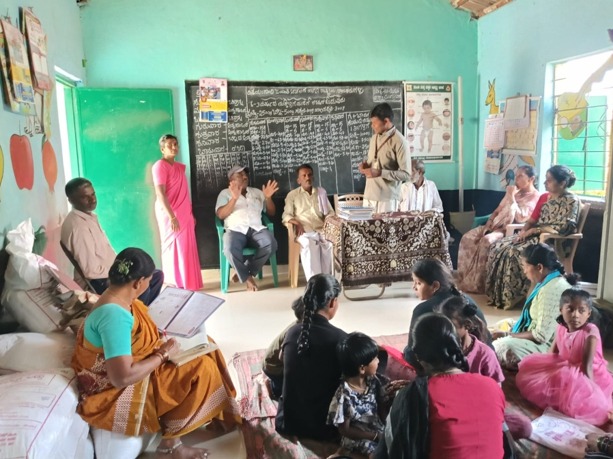
Healthcare works best when communities have a say in their own well-being. Across 44 sub-centers in Hunsur taluk, a vital transformation is taking place at the primary care level through the revitalization of Jana Arogya Samitis (JAS) under the Swasthya Swaraj initiative.
To ensure healthcare governance is truly inclusive, the initiative supported the restructuring of these local health committees in line with state guidelines. By coordinating closely with health staff and residents, the project ensured fair representation across diverse community groups, giving voice to marginalized populations.
Rebuilding the committees was only the first step. To make them truly effective, capacity-building workshops were conducted for committee members. These sessions focused on understanding roles and responsibilities, planning meetings, identifying local health priorities, and monitoring service delivery. Members learned how to track facility progress, address village-level health challenges, and collaborate with government departments for long-term solutions.
Pre- and post-training evaluations showed significant growth in members’ confidence and knowledge. Field-level reviews further confirmed increased meeting attendance and active participation. By reactivating these committees, GRAAM helped strengthen community-led healthcare management and Panchayati Raj-led health governance, ensuring primary health centers directly serve the real needs of rural families.
Key Takeaway
Empowered local health committees bridge the gap between rural communities and public healthcare systems, fostering accountable, participatory, and sustainable primary health governance.
Join the Conversation
How can local communities play a stronger role in improving public healthcare in your area? Let us know your thoughts!
#CommunityHealth #HealthcareGovernance #Hunsur #SwasthyaSwaraj #RuralHealth