GRAAM brings together 20 professionals from 12 organisations to strengthen results-oriented CSR project planning, monitoring, evaluation and evidence-based decision-making.
Building Stronger Foundations for Impact-Driven CSR
As Corporate Social Responsibility (CSR) initiatives continue to evolve in India, demonstrating measurable outcomes and meaningful community impact has become increasingly important. Beyond implementing development projects, organisations must strengthen their ability to assess progress, measure results and use evidence to improve programme effectiveness.
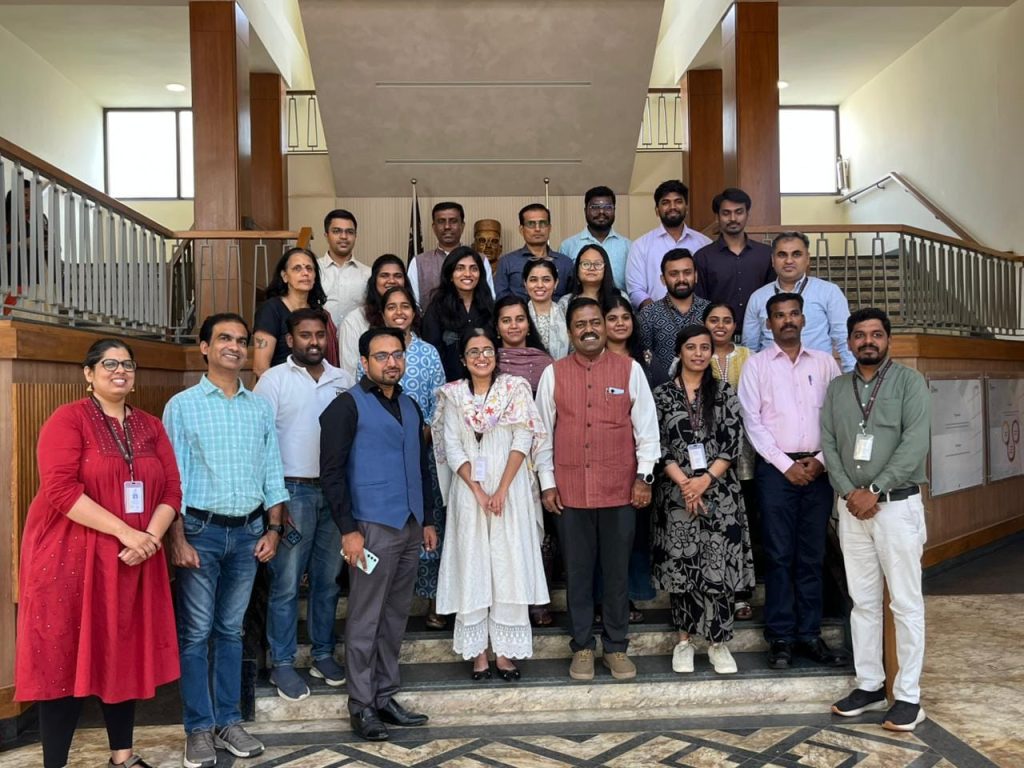
Recognising this need, Grassroots Research and Advocacy Movement (GRAAM) organised a two-day CSR Monitoring, Evaluation, Accountability and Learning (MEAL) Training Programme on 3–4 September 2026, at RV Minerva, RV Teachers College, Jayanagar, Bengaluru.
The programme brought together 20 professionals representing 12 organisations, including corporate CSR teams, corporate foundations, educational institutions and non-profit organisations. It aimed to strengthen participants’ capacity to design, implement and manage results-oriented CSR projects through structured monitoring, evaluation, accountability and learning practices.
Strengthening Capacities in Monitoring and Evaluation
The training followed a structured approach, combining conceptual learning with practical exercises to help participants understand and apply essential monitoring and evaluation tools.
The programme was facilitated by a faculty team comprising Dr. Basavaraju R. Shreshta, Dr. Ananya Samajdar, Dr. Balu I and Dr. Dwarika Prasad Uniyal, supported by Ms. Suma Rao, Ms. Pushpa, Ms. Ruchika and Mr. Sarath KT.
The first day focused on understanding development processes and introducing the fundamental principles of monitoring and evaluation in CSR.
Participants explored the importance of defining clear and measurable project objectives using the SMART framework (Specific, Measurable, Achievable, Relevant and Time-bound). Sessions also introduced the Theory of Change, enabling participants to understand how project activities contribute to outputs, outcomes and long-term development impact.
Discussions highlighted the importance of identifying assumptions, understanding development pathways and integrating accountability and learning throughout the project cycle.
Translating Concepts into Practical Application
The second day focused on applying monitoring and evaluation concepts through practical frameworks, facilitated exercises and collaborative learning.
Participants were introduced to the Results Framework, including the formulation of indicators, baselines, targets and means of verification required to assess project performance.
Another session explored the integration of monitoring and evaluation with project management, highlighting how work plans, budgets, risk management and monitoring systems can collectively support timely decision-making and programme improvements.
Through structured group exercises, participants developed SMART objectives, formulated Theories of Change and prepared Results Frameworks for project scenarios. Group presentations provided opportunities to exchange perspectives, receive faculty feedback and understand how these tools can be adapted to different organisational and development contexts.
The programme also incorporated pre-training and post-training assessments, along with participant feedback, to review learning and inform future capacity-building initiatives.
Encouraging Collaboration across the CSR Ecosystem
An important feature of the programme was the participation of professionals representing both CSR funding organisations and implementing institutions.
Organisations represented included Bosch India Foundation, United Way Bengaluru, Kumaraguru Institutions, Max Social Innovations Foundation, Lend A Hand India, Titan Company Limited, Societe Generale Global Solutions Centre, VISRAT, Swami Vivekananda Youth Movement, Mahathma Gandhi Rural Development & Youth Welfare Centre, Arth Social Impact Org and GRAAM.
This diverse representation created opportunities for knowledge exchange between funders and implementing partners, encouraging a shared understanding of project objectives, performance indicators, reporting requirements and evidence-based programme management.
Towards More Accountable and Effective CSR Programmes
The training concluded with group presentations, a post-training assessment, participant feedback and a valedictory session featuring certificate distribution.
The programme reinforced the importance of integrating monitoring, evaluation, accountability and learning into every stage of CSR project management, rather than treating these processes solely as reporting requirements.
For GRAAM, the initiative reflected its continued commitment to strengthening institutional capacities, promoting evidence-based development practices and supporting organisations in designing more effective and accountable social interventions.
By equipping CSR professionals and development practitioners with practical monitoring and evaluation tools, the programme contributed to strengthening the foundation for results-oriented CSR initiatives and informed decision-making.
The training also highlighted the value of continued collaboration and learning across organisations to improve programme design, assess development outcomes and translate evidence into meaningful action.