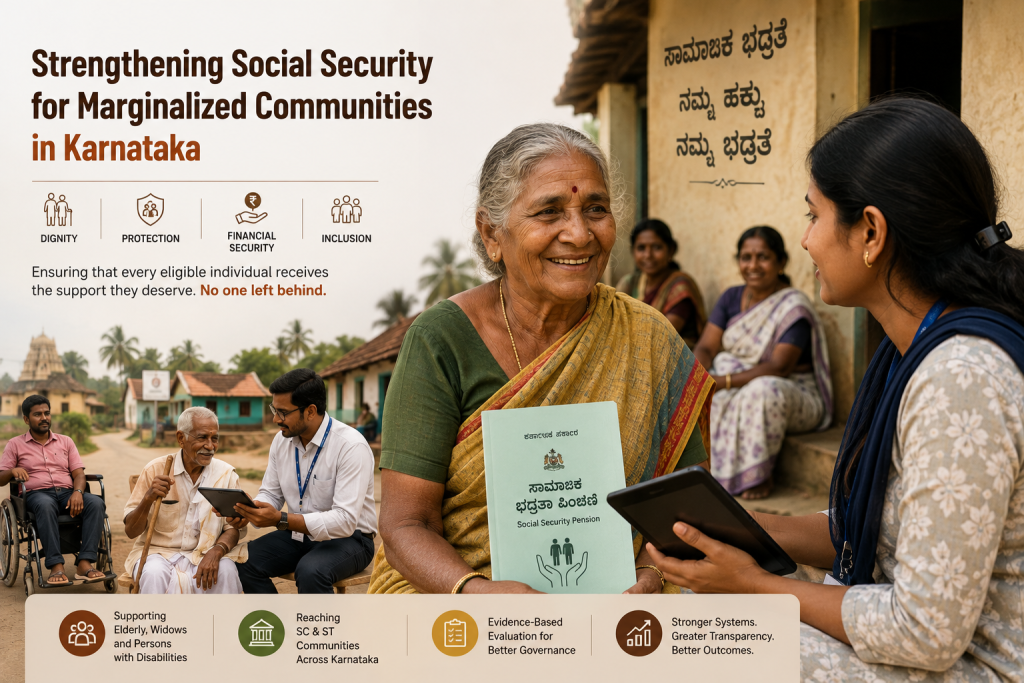
For vulnerable individuals, a reliable safety net provides dignity, independence, and daily stability. Across Karnataka, social security pension schemes aim to reach Scheduled Caste (SC) and Scheduled Tribe (ST) communities, helping elderly citizens, widows, and persons with disabilities cover essential living expenses.
To assess how effectively these welfare measures reach the families who need them most, an independent third-party impact evaluation was initiated for the five-year period spanning 2020–21 to 2024–25. The study goes beyond statistics to capture how direct income support influences household security, health-seeking choices, and social dignity among historically marginalized groups.
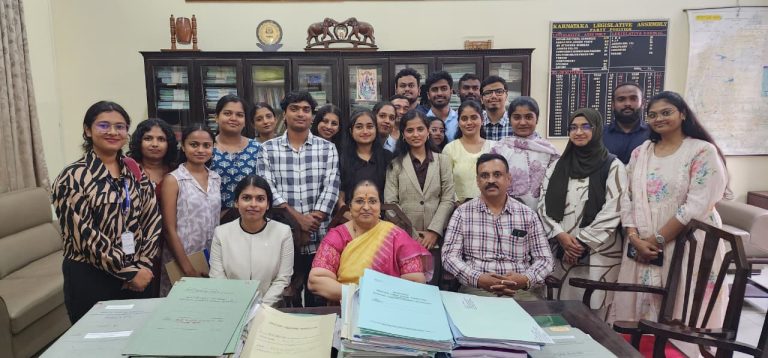
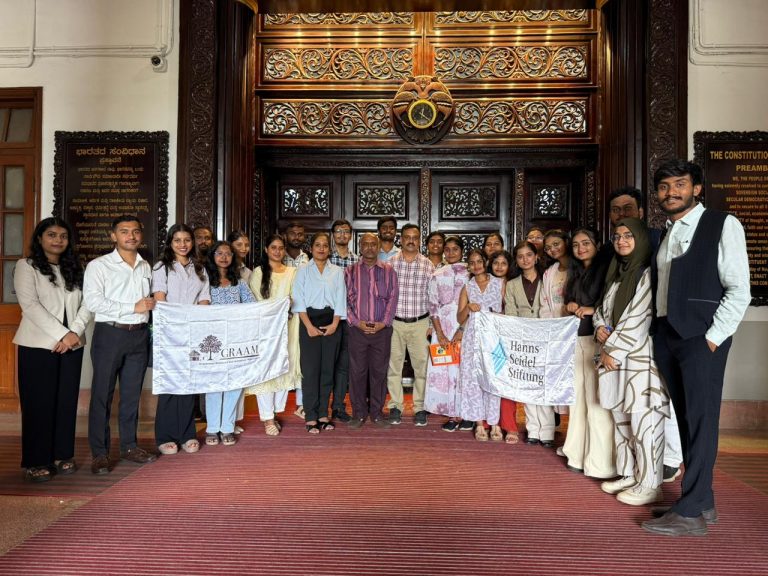
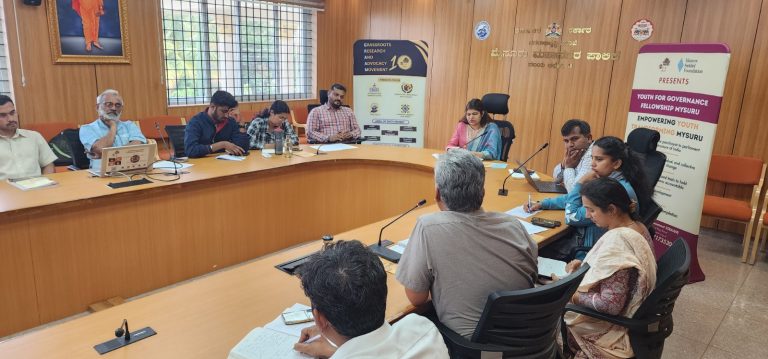
Using a comprehensive research strategy, the study combines field surveys, statistical reviews, and direct consultations with community members and local administrators. By examining doorstep delivery mechanisms and identifying operational bottlenecks, the team is gathering clear, ground-level insights across urban and rural pockets of Karnataka.
The final output of this effort will be a detailed evaluation report delivered in both English and Kannada. Designed as an actionable tool for policymakers, the study provides data-backed recommendations to streamline pension distribution, enhance administrative transparency, and ensure no eligible beneficiary is left behind.
Join the Conversation
What measures can help make social security pensions more accessible to remote communities? Share your ideas and join the discussion below!