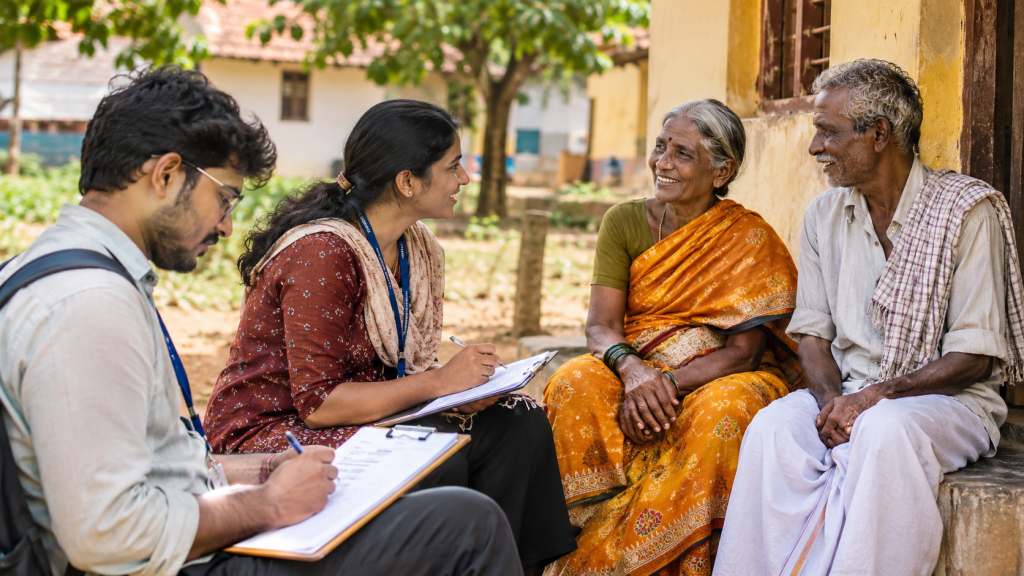
For millions of vulnerable families, a social security pension isn’t just financial assistance—it is a lifeline that ensures dignity, security, and basic sustenance. Ensuring that these welfare measures effectively reach Scheduled Caste (SC) and Scheduled Tribe (ST) communities requires rigorous, ground-level assessment.
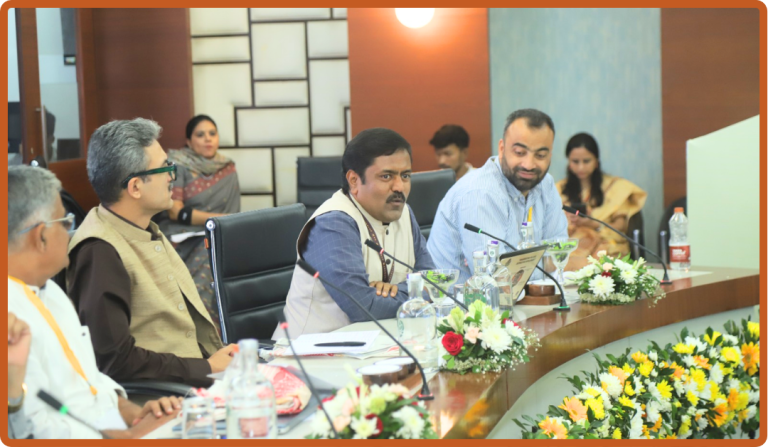
The team recently reached a crucial milestone in evaluating Karnataka’s Social Security Pension Schemes for SC/ST beneficiaries spanning the period from 2021–22 to 2024–25. In a collaborative preliminary meeting chaired by the Karnataka Monitoring and Evaluation Authority (KMEA), key stakeholders gathered to chart the path forward. Representatives from the Department of Social Welfare, the Karnataka State Disaster Management Authority, and the Revenue Department’s Social Security and Pension Division came together to align on evaluation strategies.
Following the discussions, comprehensive evaluation tools were developed and submitted to KMEA for expert review. The organization has also initiated the gathering of secondary data from key government departments to lay the groundwork for upcoming field pilot testing.
By refining evaluation mechanisms, this initiative aims to identify gaps, streamline delivery systems, and ensure that government welfare schemes translate into meaningful, lasting security for marginalized households across the state.
Key Takeaway:
Systematic evaluation of social security schemes ensures transparency, helps address delivery bottlenecks, and maximizes the real-world impact of public funds for underserved communities.
Join the Conversation
How can evaluation frameworks better capture the lived experiences of pension beneficiaries at the grassroots? Share your thoughts below!